
- Contents
This report presents findings from the GeoPoll Africa Football Survey 2026, a five-country study conducted in May 2026. The survey explored the depth and nature of football fandom across Kenya, Ghana, Nigeria, Mozambique, and South Africa, covering media consumption habits, league and club preferences, tournament predictions, fantasy football participation, live match attendance, and sports betting behaviour.
Fieldwork was conducted at the peak of the 2025–26 European football calendar, during the closing weeks of the English Premier League and La Liga seasons, and in the lead-up to the UEFA Champions League final between Paris Saint-Germain and Arsenal on 30 May 2026 in Budapest. This timing ensured that respondent engagement with the sport was at its highest, producing rich and timely data on fan sentiment and preferences.
The findings offer brands, broadcasters, rights holders, and sponsors a data-driven view of how football is consumed across five of Africa’s most important markets, and where the key differences and opportunities lie.
Key Findings
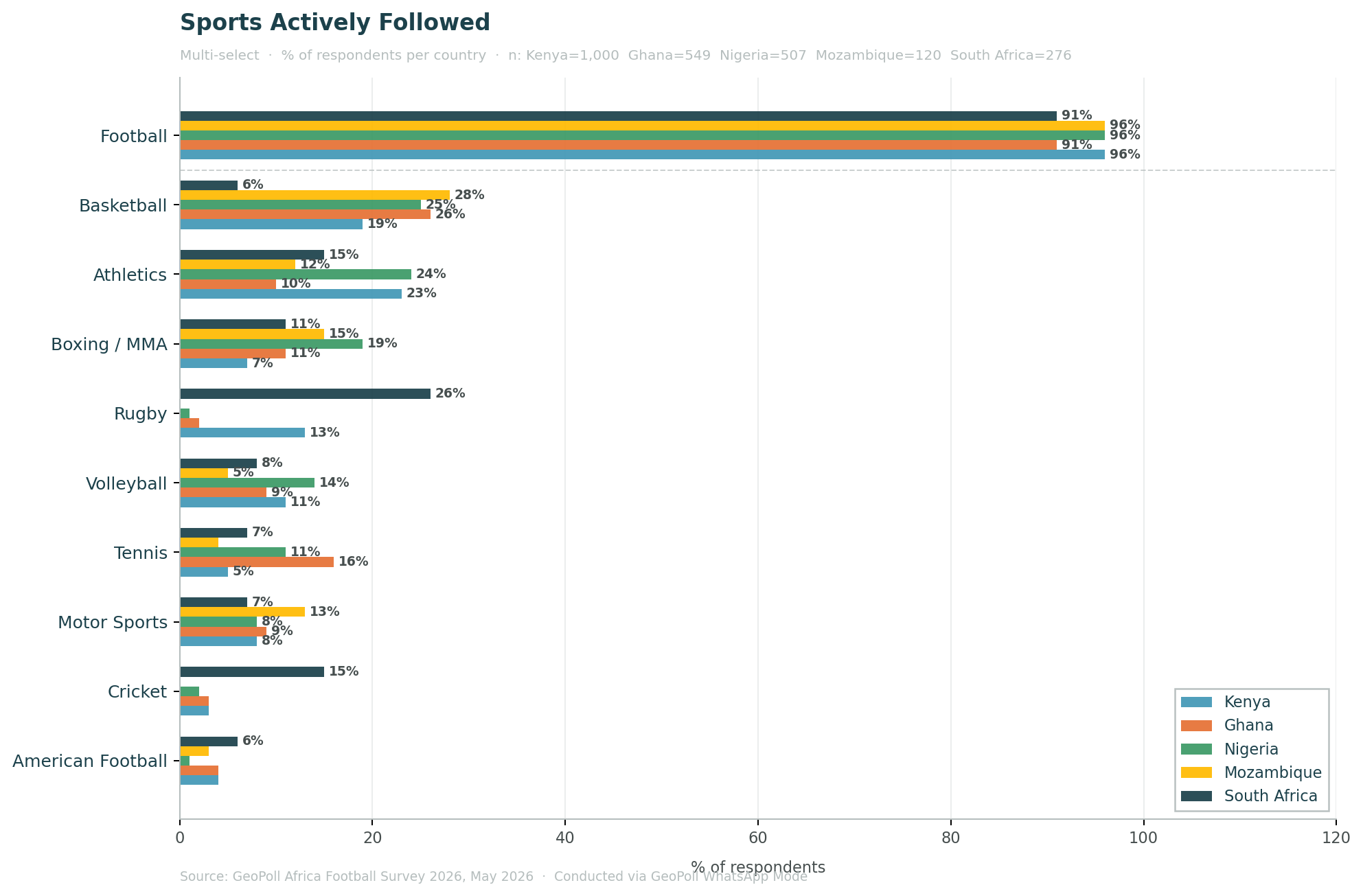
- Football is the clear #1 sport across all five markets, with 91–96% followership rates, reinforcing its dominance in African sports culture.
- Television remains the leading platform for football news and live viewing, though social media is rapidly growing and already leads in Ghana.
- The English Premier League is the most preferred league in four markets, while La Liga leads in Mozambique.
- Barcelona is the favorite to win La Liga across all surveyed markets, with support ranging from 70–86%.
- South Africa is the only market predicting Arsenal to win the UCL final, while all other countries favor PSG.
- Kenya is the most commercially engaged football market, leading in match viewing, fantasy football participation, and betting activity.
- Ghana has the lowest stadium attendance (43%) but the highest desire to attend matches in the future (53%).
- Mozambique shows the widest gender gap in betting, with 71% of men actively betting compared to 27% of women.
Football as the Dominant Sport
Football’s popularity significantly surpasses that of all other sports. While basketball and athletics attract moderate interest in select markets, no other sporting category comes close to matching football’s reach or influence. For brands, broadcasters, advertisers, and content creators, the data reinforces football as Africa’s most powerful platform for mass audience engagement and consumer connection.
National Team Loyalty
National team followership is remarkably strong across all five markets, with engagement levels exceeding 89% in every country surveyed. Mozambique records the highest level of support at 92%, closely matched by Kenya and Nigeria at 92% each, while Ghana follows at 91%. South Africa posts the lowest figure at 90%, though this still reflects an exceptionally high level of national team engagement.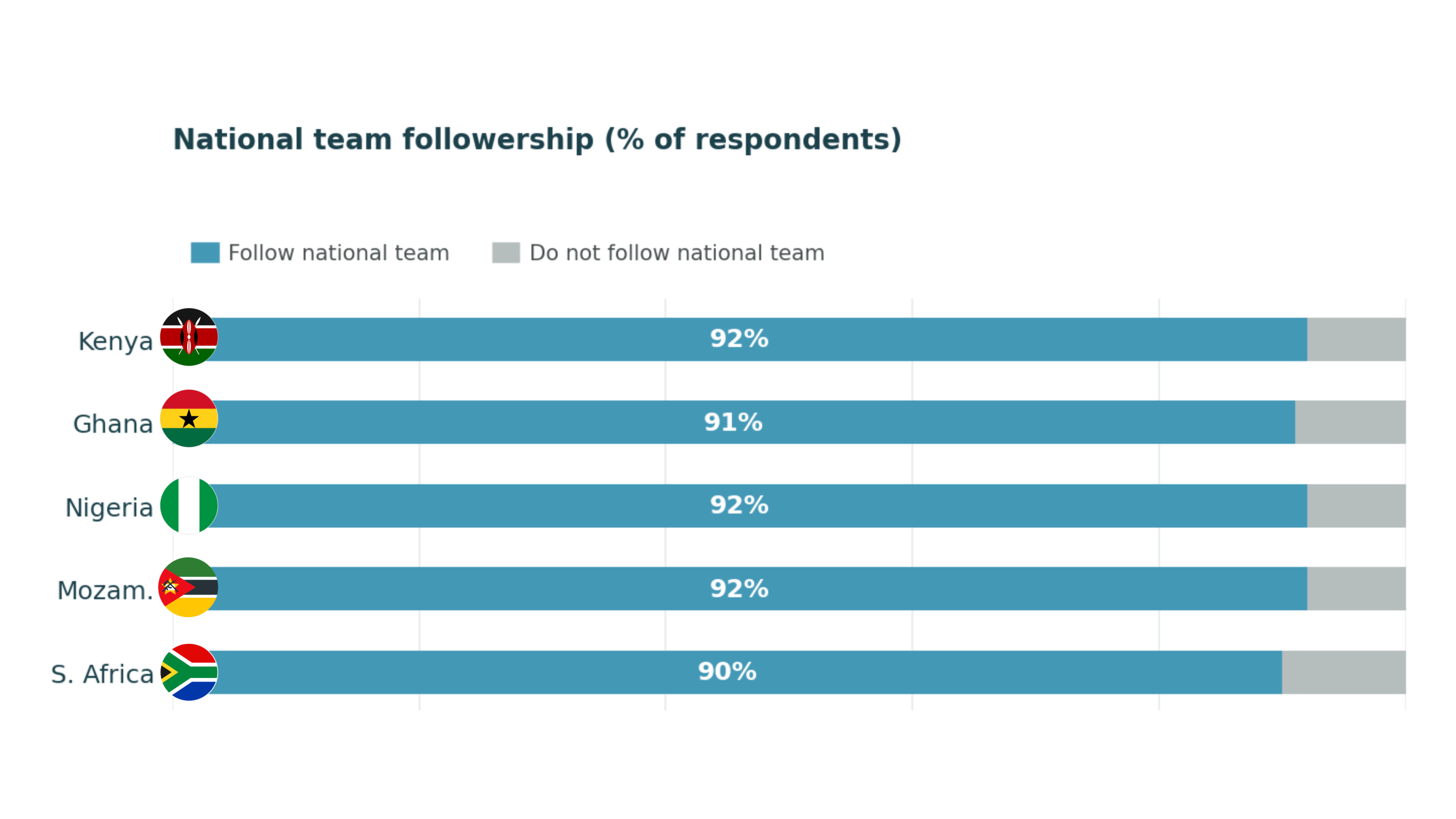 The findings highlight the deeply emotional and identity-driven nature of football fandom across Africa. Even among fans who primarily follow European club football, loyalty to national teams remains firmly rooted. For sponsors, broadcasters, and rights holders, this presents a unique dual opportunity: leveraging the global popularity of European club competitions while also tapping into the strong local passion surrounding international tournaments such as the Africa Cup of Nations and FIFA World Cup qualifiers.
How Fans Follow Football News & Commentary
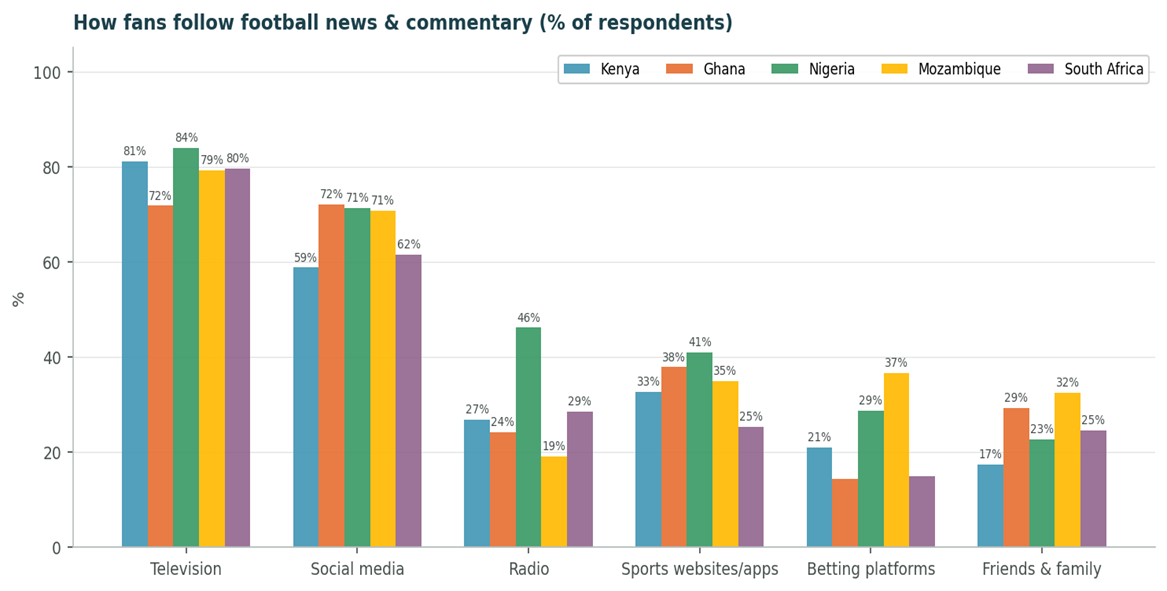
Television remains the leading source of football news, analysis, and commentary across four of the five markets surveyed, with Nigeria recording the highest TV reliance at 84%, followed closely by Kenya at 81%. However, social media continues to rapidly close the gap in every market and has already overtaken television in Ghana, where both channels stand at 72%, signaling a major shift toward digital-first football consumption. This trend highlights a broader transformation in how fans engage with football content, particularly among younger and more connected audiences, with important implications for media strategy and advertising investment across Africa.
Radio also maintains strong relevance in key markets, particularly in Nigeria (46%) and Kenya (27%), reflecting the enduring influence of traditional broadcast infrastructure and the accessibility of audio-based content. Meanwhile, sports betting platforms are emerging as increasingly important engagement hubs, especially in Mozambique (37%), Nigeria (29%), and Kenya (21%). Beyond wagering, these platforms are becoming active destinations for live updates, statistics, predictions, and fan interaction, further blurring the line between sports media and betting ecosystems. This growing convergence presents significant commercial opportunities, while also raising important regulatory and responsible gaming considerations.
Community-driven communication channels remain highly influential across all markets. WhatsApp groups, alongside conversations with friends and family, continue to shape how fans discuss and consume football content. Mozambique (32%) and Ghana (29%) report the highest reliance on these interpersonal networks, reinforcing the deeply social and community-oriented nature of football fandom in Africa. The findings point to strong potential for brands, broadcasters, and football organizations to leverage WhatsApp-based campaigns, fan communities, and peer-to-peer engagement strategies to build deeper audience connections.
Live Match Viewing
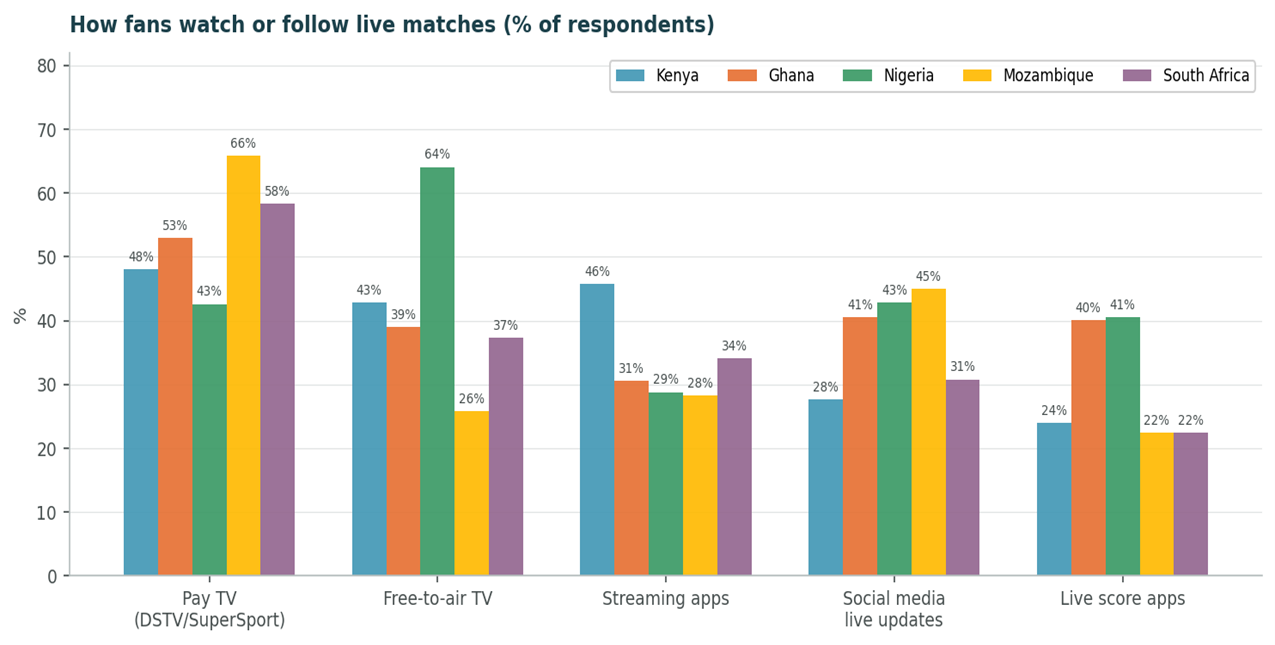
Pay TV, specifically DSTV and SuperSport, is the leading live match viewing channel in four of five countries, with particularly strong penetration in Mozambique (66%), South Africa (58%), and Ghana (53%). This confirms that subscription sports broadcasting continues to dominate the live match experience across much of the continent, even as digital alternatives gain ground.
Nigeria is the exception, where free-to-air television leads at 64%, a likely reflection of lower pay TV penetration and the broader reach of terrestrial broadcast infrastructure in the country. Streaming services and apps rank second or third in Kenya (46%) and South Africa (34%), pointing to a more digitally mature viewing audience in these markets where mobile data affordability and smartphone penetration are more advanced.
Social media live updates are widely used as a real-time supplement to traditional viewing, particularly in Mozambique (45%), Nigeria (43%), and Ghana (41%). Bar and fan viewing centre attendance is also notable in Mozambique (38%) and Kenya (28%), indicating that communal match viewing remains a culturally embedded experience in these markets.
Weekly Viewing Volume
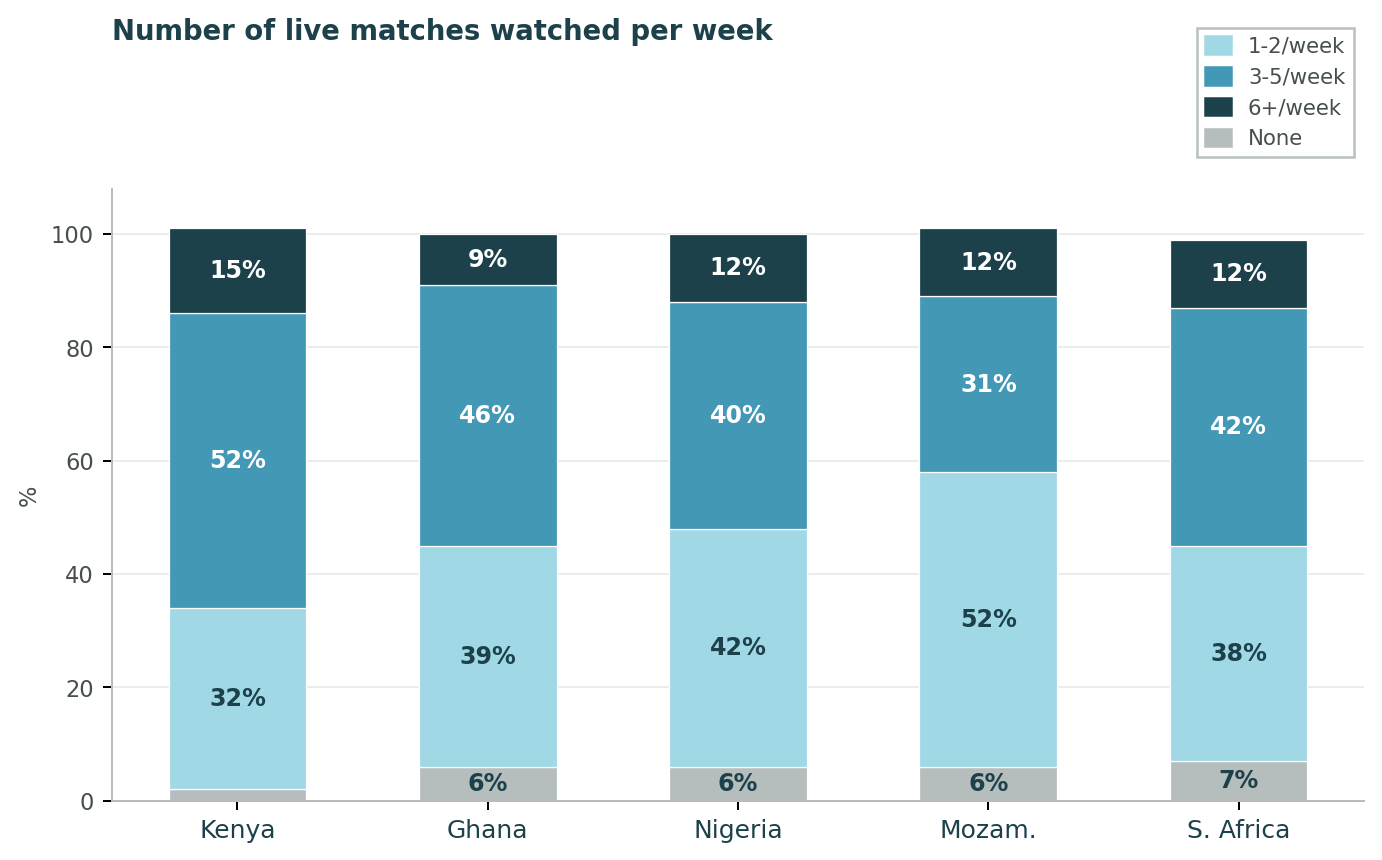
Kenya stands out as the most intensive live football viewing market by a clear margin. An impressive 67% of respondents watch three or more matches per week, including 15% who watch six or more, representing the highest “heavy viewer” segment across all five countries. This level of consistent engagement positions the Kenyan audience as particularly valuable for advertisers, broadcasters, and sponsors seeking frequent and sustained exposure to football content.
At the other end of the spectrum, Mozambique shows the most casual viewing pattern. Just 42% of respondents watch three or more matches weekly, while a majority (52%) limit their consumption to one to two matches per week, indicating a more selective and episodic engagement style.
Ghana and Nigeria sit in a middle range, with approximately 45–55% of respondents watching three or more matches weekly. This suggests a balanced mix of casual and regular viewers, offering both reach and moderate frequency opportunities for media planners.
These variations in viewing intensity across markets highlight the importance of tailoring media strategies, particularly in terms of frequency, scheduling, and campaign saturation—to match the distinct consumption behaviours in each country.
Leagues Followed
The English Premier League is the most followed football league in four of five countries, with followership rates that range from exceptional (96% in Kenya, 91% in Nigeria) to strong (83% in Ghana, 82% in South Africa). The EPL’s pan-African dominance is a product of decades of broadcast investment, the global profiles of its clubs, and its large number of African players in visible roles. For the EPL and its clubs, Africa represents a fan base of enormous size and considerable commercial potential that remains underdeveloped from a direct monetisation standpoint.
Mozambique is the one market where La Liga leads. At 81% followership, La Liga edges the EPL (78%) in Mozambique, likely reflecting the country’s Lusophone cultural ties and the Portuguese language’s proximity to Spanish football content. This makes Mozambique a distinctive market where La Liga clubs, particularly Barcelona and Real Madrid, may find stronger natural brand equity than their English counterparts.
UEFA Champions League followership is strong across all five countries (46–71%), confirming that the pan-European knockout format captures a large and engaged secondary audience in addition to domestic league fans. Local African leagues record meaningful followership in South Africa (37%) and Mozambique (38%), where domestic football plays a more prominent role in the sports media landscape.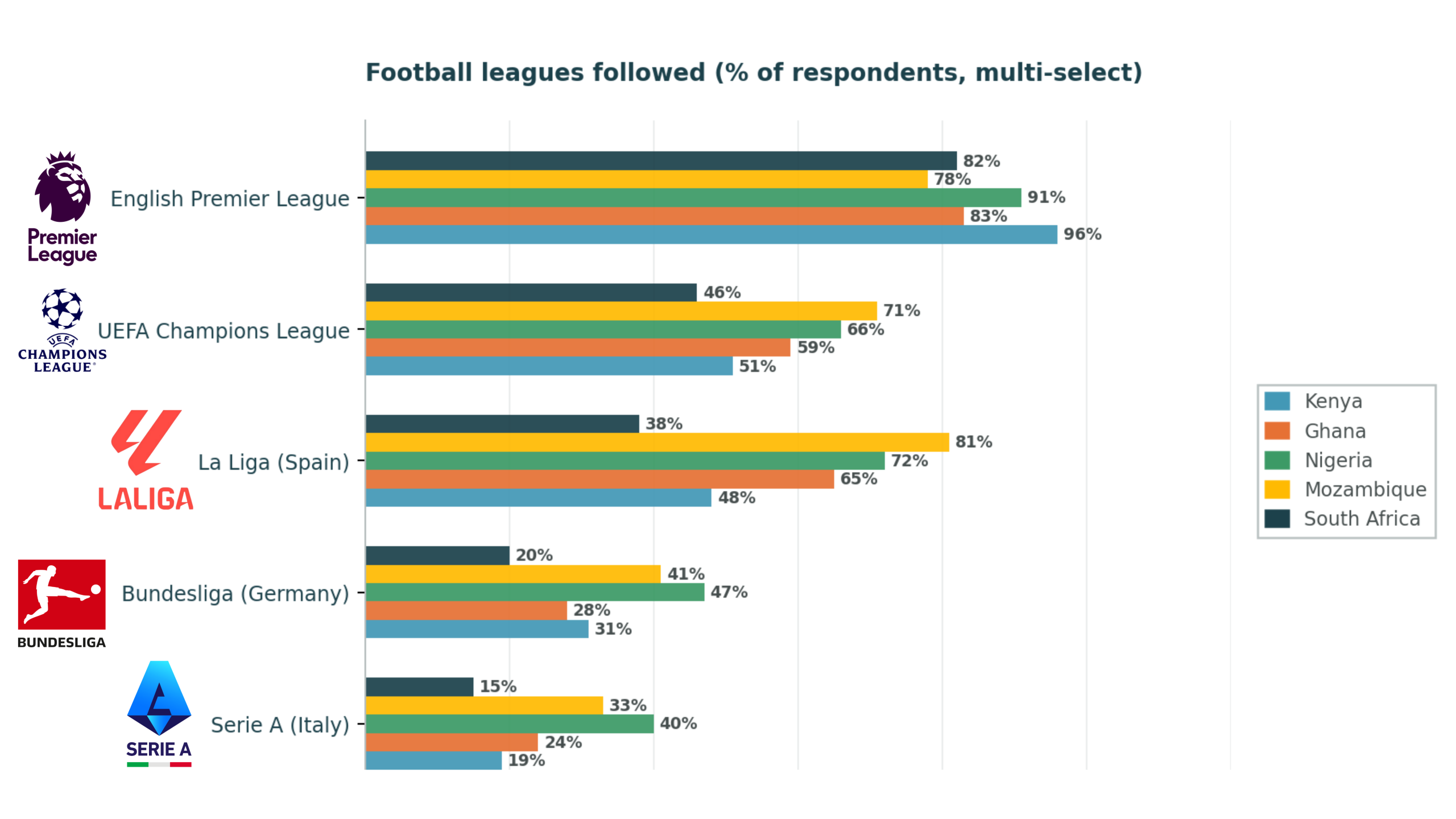
2025–26 English Premier League Title
Arsenal is the predicted EPL champion across all five countries surveyed. Support for the Gunners is strongest in Nigeria (67%) and Ghana (63%), markets where Arsenal has historically commanded strong followership. Manchester City receives its most competitive support in Mozambique (48%) and South Africa (45%), where City’s recent trophy haul may have translated into stronger brand recognition and supporter identification.
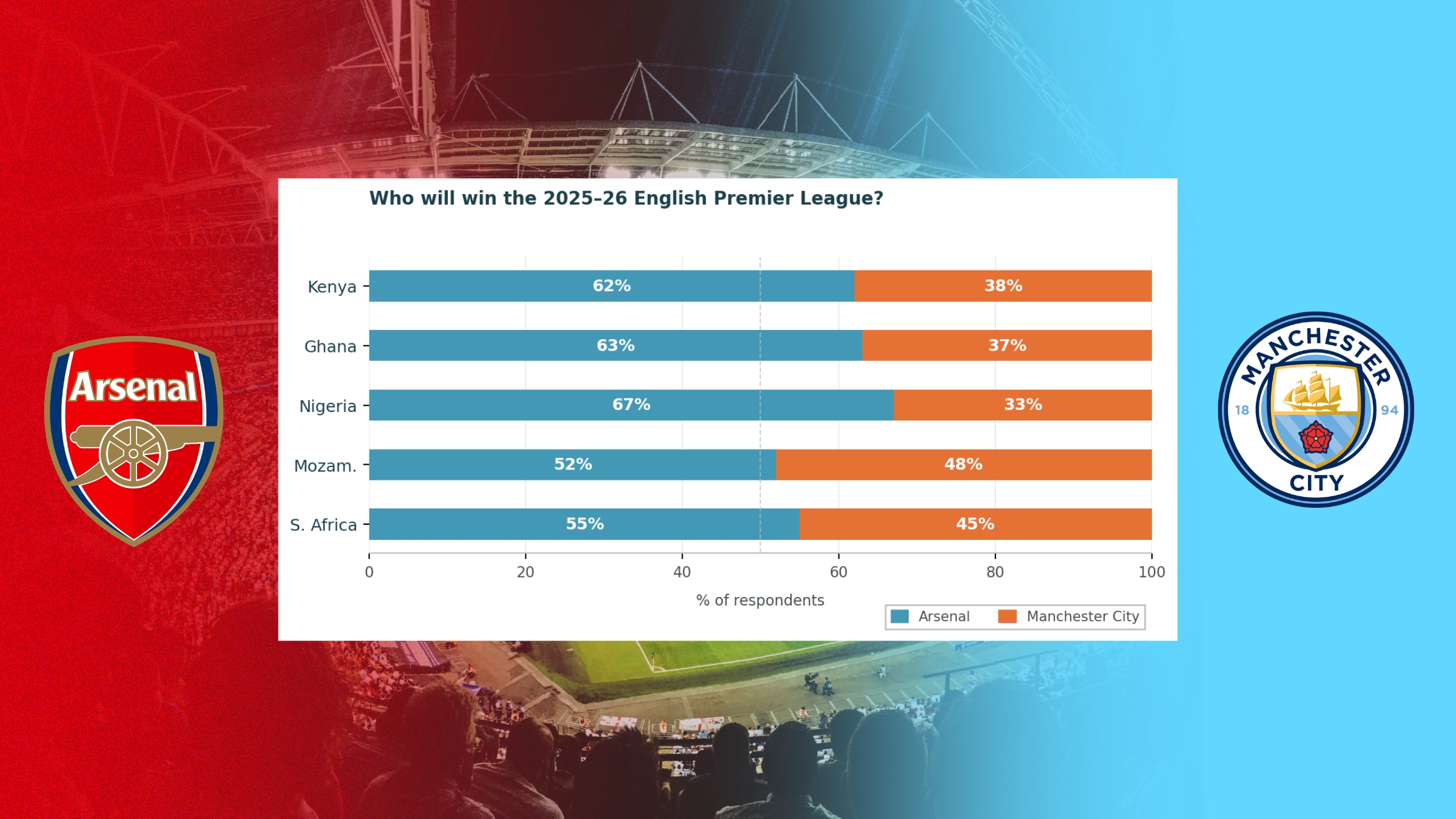
The consistency of Arsenal’s lead across diverse markets, spanning East, West, and Southern Africa, reflects both the club’s broad continental fan base and respondents’ assessment of the on-pitch competition at the time of fielding. These predictions carry commercial implications for sponsors and partners of both clubs seeking data-driven evidence of their brand’s reach and appeal in African markets.
UEFA Champions League Final: PSG vs Arsenal
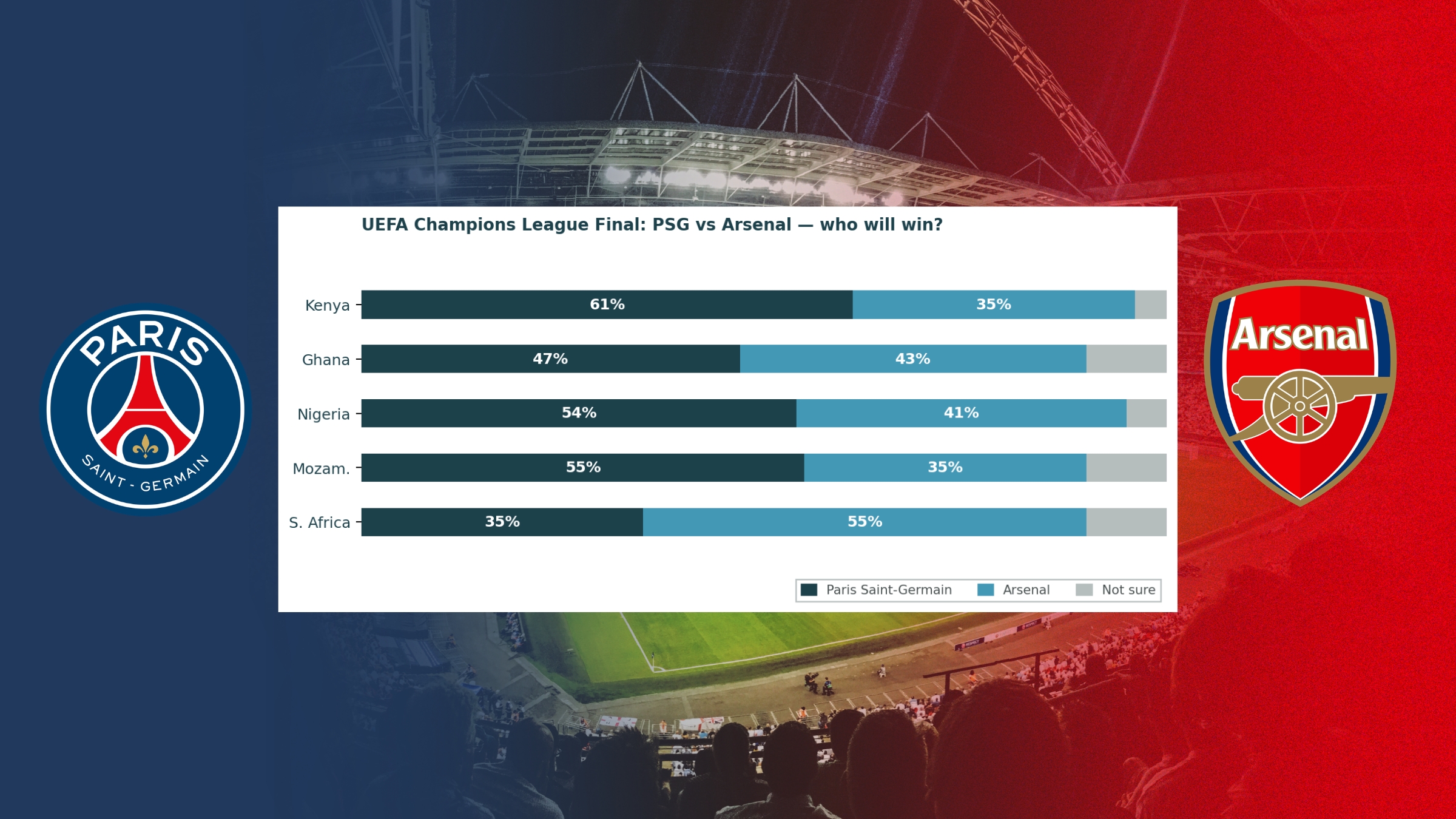
PSG is the overall favourite to win the 2025–26 UEFA Champions League final in four of the five markets surveyed. Kenya gives PSG its most commanding lead (61%), followed by Mozambique (55%) and Nigeria (54%). Ghana is the most divided, with PSG leading narrowly (47%) and the highest “not sure” rate (10%) of any market, reflecting genuine uncertainty and possibly a more even split in club loyalties.
South Africa stands apart as the only country where Arsenal is the clear favourite (55%). This finding aligns with South Africa’s historically strong Arsenal support base and the country’s deeper immersion in English football culture, driven in part by stronger pay TV penetration and historical broadcasting ties to the UK. It also suggests that Arsenal’s marketing presence in South Africa has been particularly effective at converting viewership into active supporter identity.
Fantasy Football Participation Across Markets
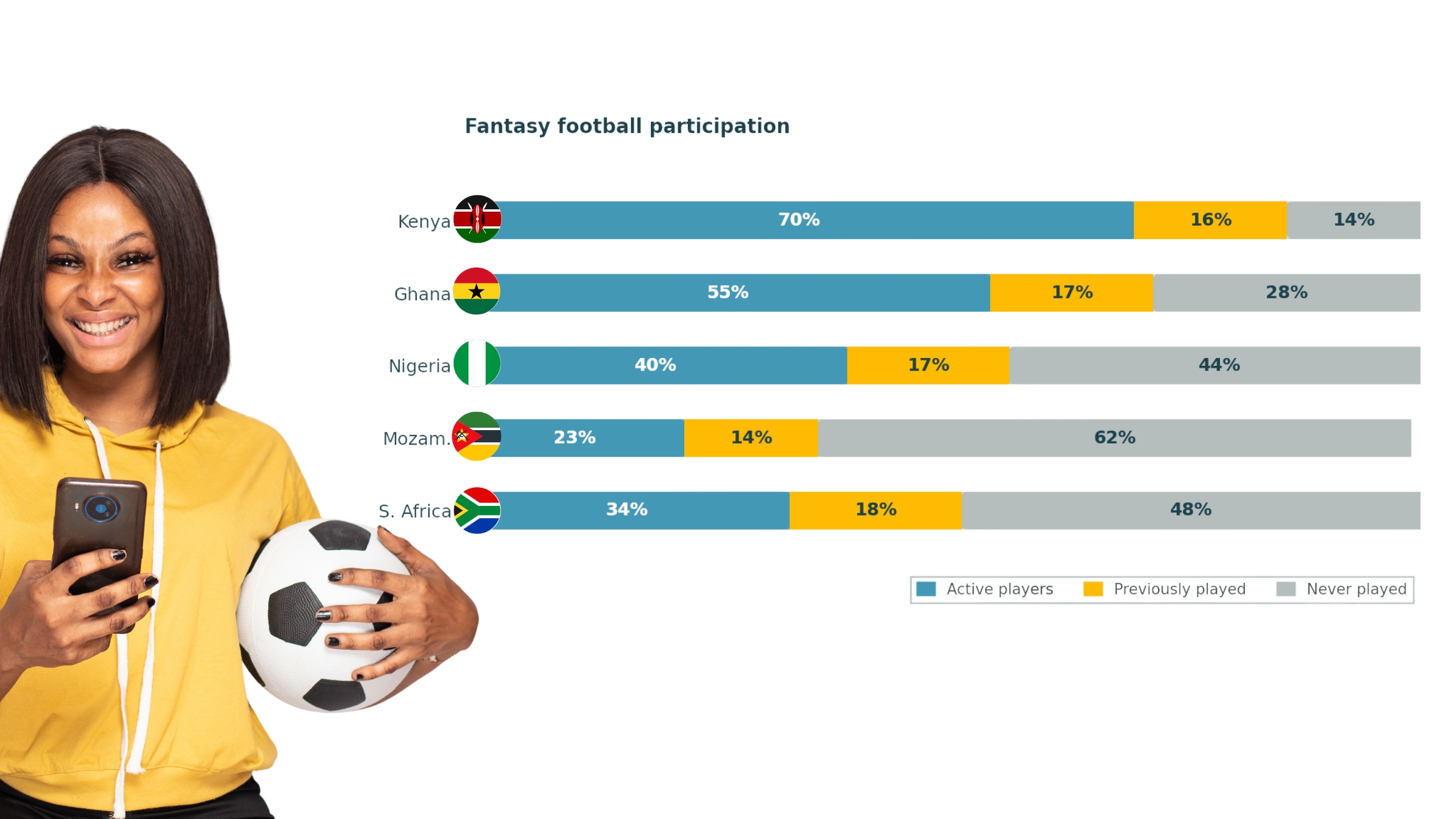
Fantasy football participation varies substantially across the five countries, ranging from 70% active players in Kenya to just 23% in Mozambique. This range, a three-to-one gap between the most and least engaged markets, reflects differences in digital literacy, mobile data affordability, EPL cultural penetration, and the maturity of the fantasy gaming ecosystem in each country.
Kenya’s dominance in fantasy participation aligns with its broader profile as the most intensively engaged football market in the survey. Ghana (55%) and Nigeria (40%) show meaningful participation, while South Africa (34%) and Mozambique (23%) trail. The 14–18% who previously played but stopped across all markets indicates that retention, rather than acquisition, may be the primary challenge for fantasy platforms in Africa.
Fantasy Platform Preferences
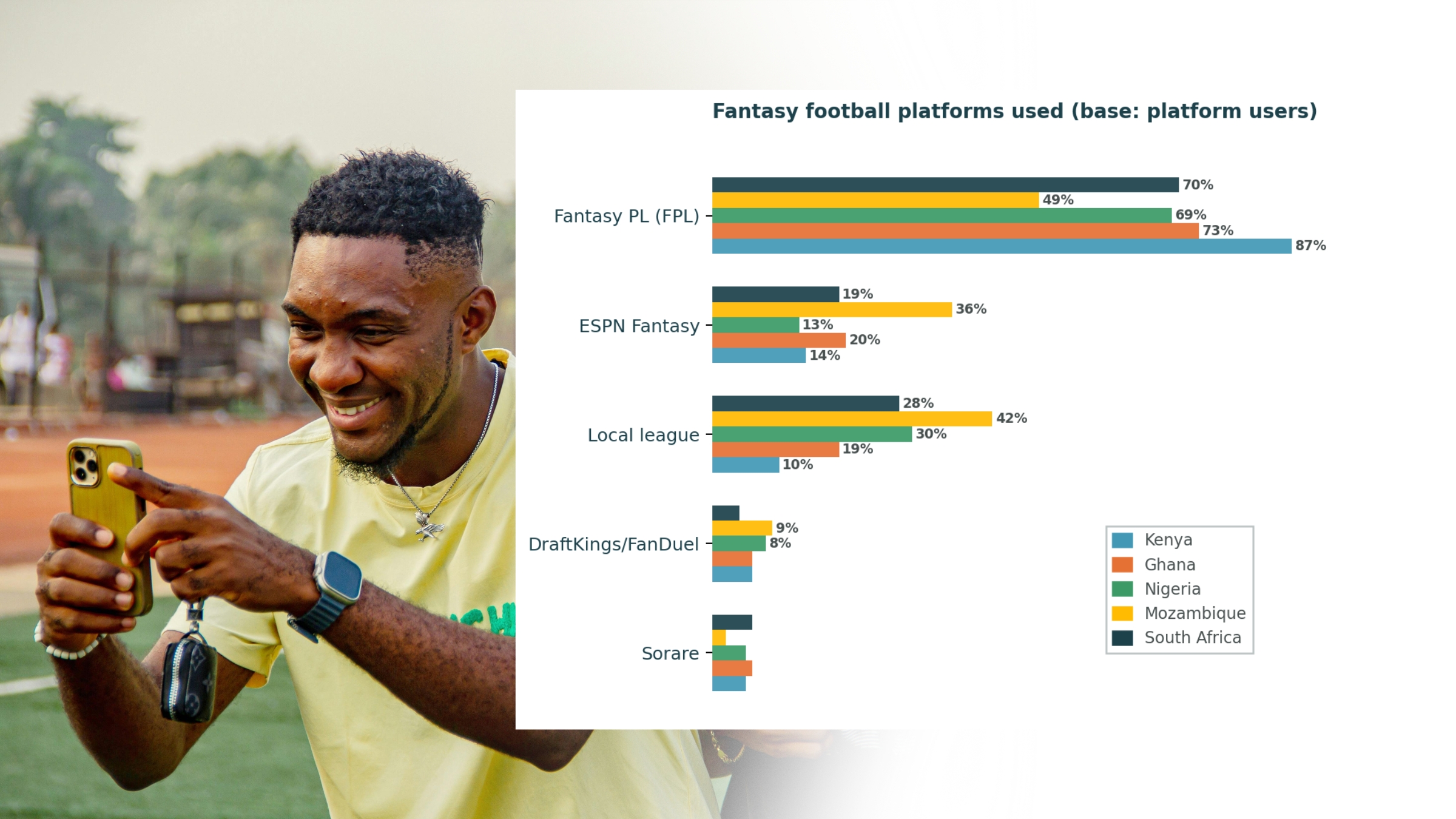
Fantasy Premier League (FPL) is the dominant platform across all five markets, used by 49–87% of fantasy players depending on the country. Kenya records the highest FPL penetration among fantasy players (87%), while Mozambique is the most diverse market, with ESPN Fantasy (36%) and local or community-organised leagues (42%) both materially challenging FPL’s lead.
The strength of local and community-organised leagues in Nigeria (30%), South Africa (28%), and Mozambique (42%) points to the social, WhatsApp-enabled dimension of fantasy football in these markets. Many players participate not through global platforms but through informal leagues organised within friend or workplace networks, suggesting a significant untracked segment of fantasy engagement. This represents both an insight for platform providers looking to formalise and monetise this behaviour and a data consideration for anyone benchmarking fantasy engagement using platform-specific metrics alone.
Stadium Attendance & the Live Match Experience
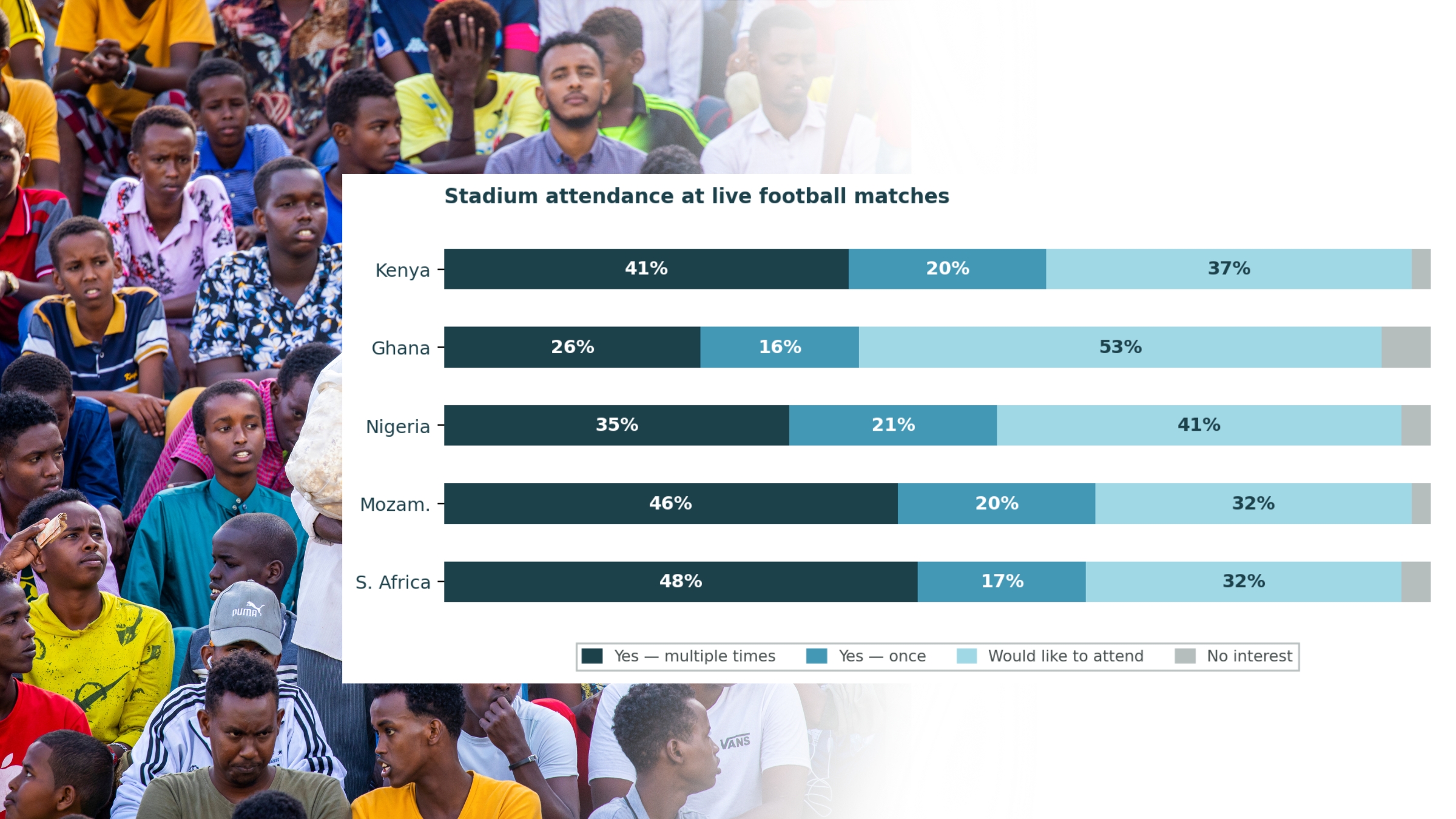
Live match attendance is a strong proxy for the depth of football fandom and the health of the domestic sporting ecosystem. South Africa (65%), Mozambique (66%), and Kenya (62%) record the highest rates of respondents who have ever attended a live match. Among those who have attended multiple times, South Africa leads at 48%, closely followed by Mozambique (46%). These figures reflect strong stadium cultures and relatively accessible match-going infrastructure in these markets.
Ghana records the lowest attendance rate (43%) but also the highest aspiration to attend among non-attenders, with 53% expressing a desire to attend a live match in the future. This gap between aspiration and behaviour suggests that structural barriers, such as ticket pricing, stadium accessibility, match scheduling, or safety perceptions, are suppressing demand that clearly exists. Nigeria (41%) also shows a strong latent demand for live attendance. For clubs, federations, and event organisers in both markets, this data points to a substantial addressable audience for whom the right interventions could convert interest into attendance.
Football Betting
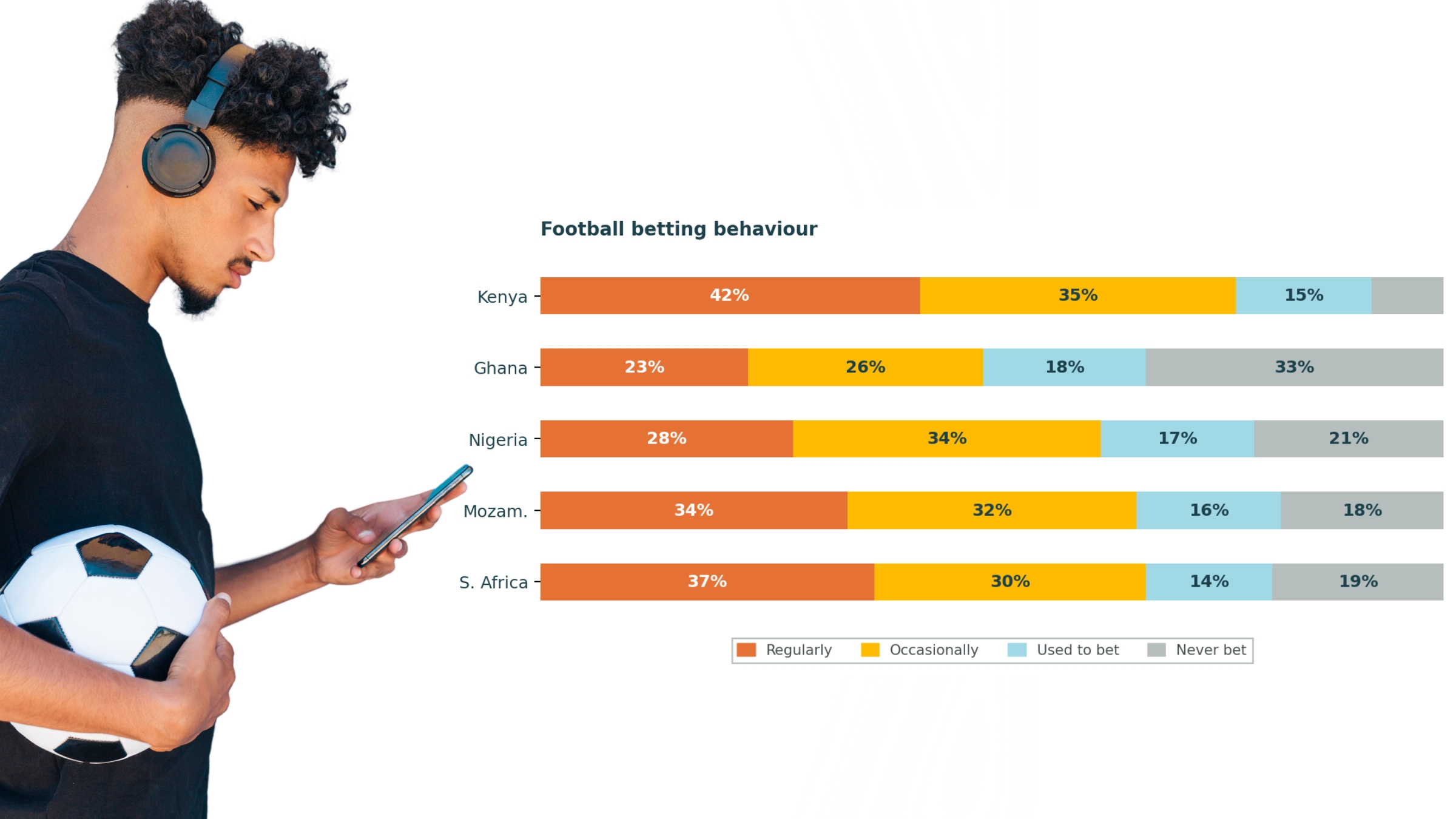
Sports betting is deeply embedded in football consumption across all five surveyed markets, with active participation (regular and occasional bettors combined) ranging from 49% in Ghana to 77% in Kenya. Kenya stands out as the most intensive market, where 42% of respondents report betting regularly—by far the highest regular betting rate across the study—highlighting how strongly wagering is integrated into everyday football engagement.
South Africa (67%), Mozambique (66%), and Nigeria (62%) also record active betting rates above 60%, confirming that sports betting is not a marginal behaviour in these countries but a mainstream element of football fandom for most respondents.
Ghana records the lowest active betting rate at 49%, likely reflecting a mix of regulatory dynamics and differing cultural attitudes toward sports wagering. Even so, there is clear latent activity in the market, with 18% of respondents saying they have previously bet but stopped, pointing to meaningful prior exposure and potential for reactivation.
The share of respondents who have never engaged in sports betting ranges from just 8% in Kenya to 33% in Ghana. This contrast highlights both the maturity of the Kenyan betting market and the significant untapped potential in West Africa, particularly as regulatory frameworks and commercial offerings continue to evolve.
Gender Differences in Betting
Male respondents bet at significantly higher rates than female respondents across all five countries. The gender gap is most extreme in Mozambique, where 71% of male respondents bet actively compared to just 27% of female respondents, a 45 percentage point differential that is among the starkest gender gaps in any metric captured by this survey. Kenya (80% male 62% female), Nigeria (65% male vs 38% female) and Ghana (51% male vs 42% female) also record meaningful gaps.
South Africa has the narrowest gender gap in betting behaviour (74% male vs 59% female), consistent with the country’s more balanced gender profile and generally more equal participation in commercial leisure activities. For betting operators seeking to broaden their consumer base, South Africa and Ghana offer the most promising environments for female-targeted product and marketing strategies.
Methodology/About this Survey
This exclusive survey was powered by GeoPoll’s AI platform; Tuucho run via the GeoPoll mobile application and WhatsApp in Kenya between between 11 and 15 May 2026 the sample size was 2,452, composed of random users between 18 and 50. Since the survey was randomly distributed to an and the results are slightly skewed towards younger respondents. All questions were self-administered via mobile survey in English.
The GeoPoll Africa Football Survey 2026 examines football consumption across five African markets, highlighting its overwhelming dominance as the continent’s leading sport with 91–96% followership and exceptionally high national team loyalty above 89% in all countries. While football engagement is near-universal, the study reveals distinct national differences in how fans consume and interact with the game across media, live attendance, fantasy sports, and betting. Kenya emerges as the most commercially engaged market, Ghana shows strong interest but lower stadium attendance, Mozambique reflects a more distinct Lusophone and La Liga-influenced profile, South Africa demonstrates strong Premier League and pay-TV-driven consumption, and Nigeria combines high engagement with strong free-to-air television reliance. Overall, the findings show a highly unified football culture in passion, but a fragmented landscape in consumption behaviour and commercial engagement opportunities.
Please get in touch with us to get more details about our capabilities, explore more on various topics in Africa, Asia, and Latin America.