
- Contents
In late May 2026, reports emerged that the United States government was in advanced discussions with Kenyan authorities to establish a quarantine facility in Laikipia County, designed to house American citizens and personnel exposed to Ebola in the region. The proposal triggered significant public debate, raising questions about sovereignty, public health risk, and the terms of Kenya’s engagement with foreign governments in health emergencies.
To understand where Kenyan public opinion stood on this issue, GeoPoll deployed a mobile panel survey between 29th and 31st May 2026, reaching 691 respondents across the country. The survey covered awareness of the Ebola outbreak, prior knowledge of the facility proposal, levels of support and opposition, the reasoning behind those positions, attitudes toward broader Kenya–US health cooperation, and the institutions and media channels Kenyans trust most when it comes to public health information.
The results are clear and consistent across the sample. Kenyans are well-informed about both the Ebola threat and the specific proposal, and they are largely opposed to it. But the nature of that opposition carries important nuance: it is rooted primarily in concern about disease transmission risk, not in anti-American sentiment or diplomatic grievance. And despite opposing this specific facility, a majority of Kenyans would support broader infectious disease preparedness cooperation with the United States.
Key Findings
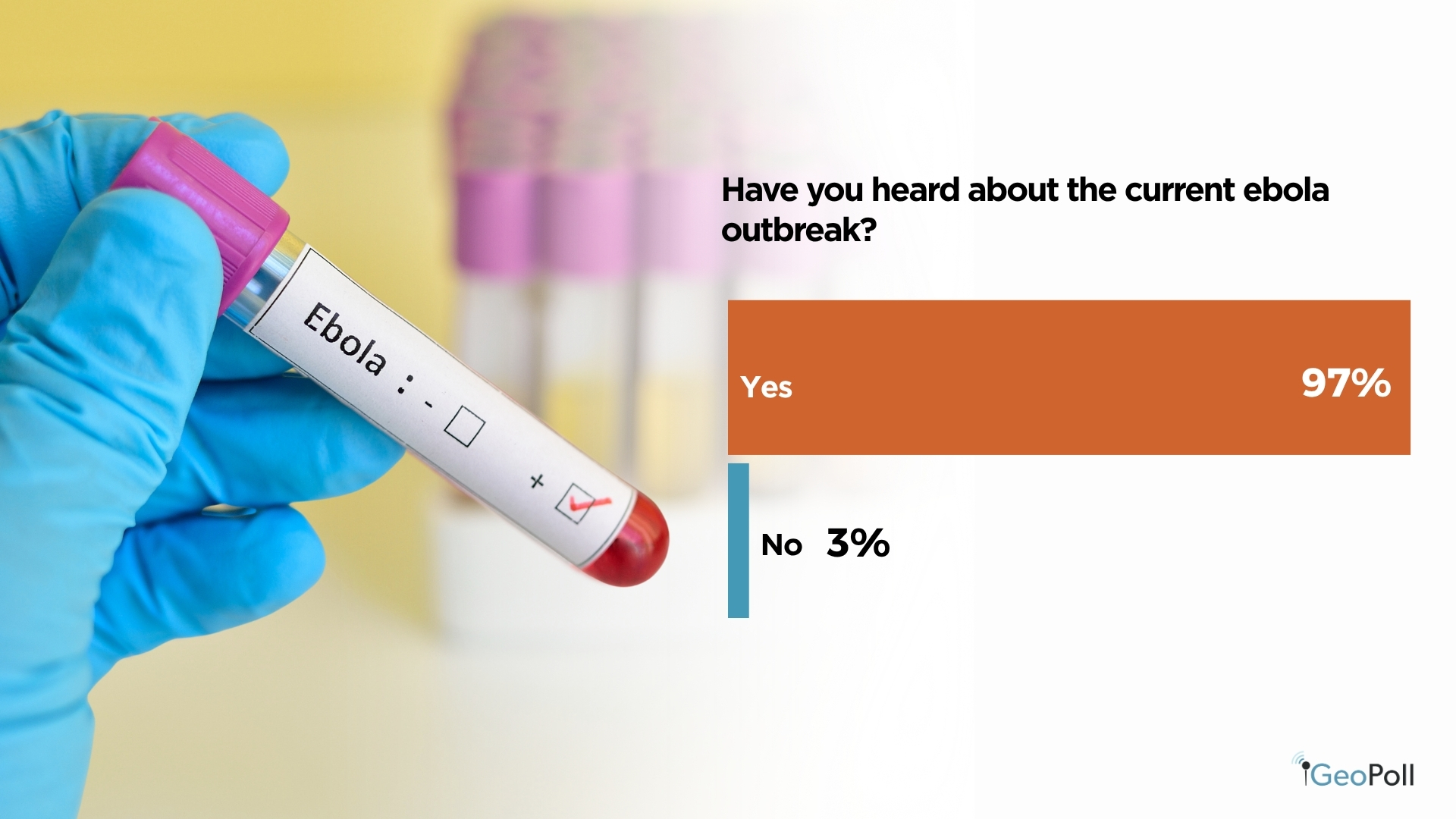
- Awareness of both Ebola and the proposed center is very high. 97% of respondents had heard of the current Ebola outbreak, and 92% were already aware of the Laikipia facility proposal before taking this survey.
- Opposition to the center is strong and decisive. 71% oppose the Kenya government allowing the center, 61% strongly. Only 26% express any level of support.
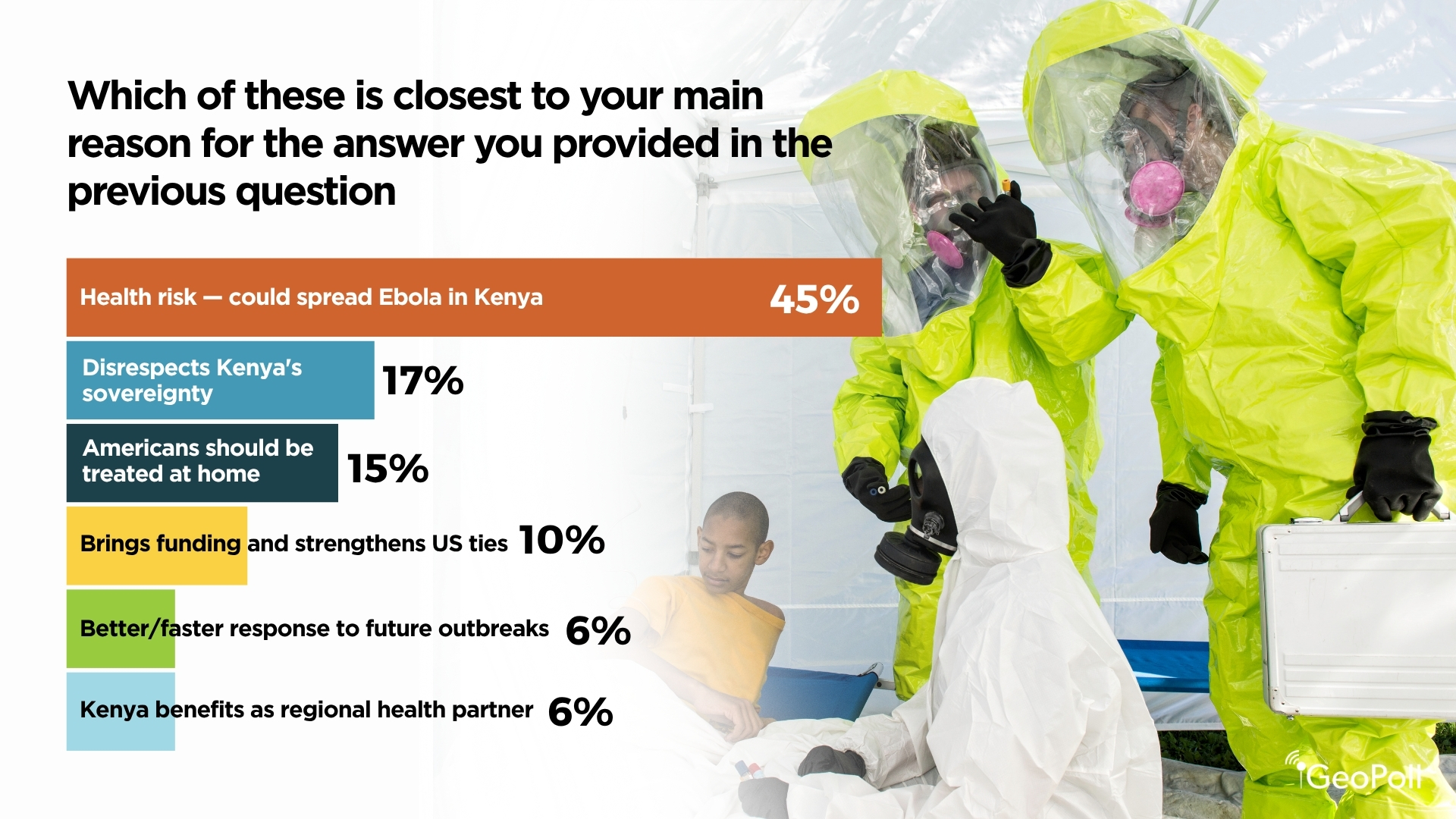
- Health risk is the dominant concern. 45% of multi-select reasons cite the center as a health risk that could spread Ebola in Kenya. Sovereignty concerns (17%) and the view that Americans should be treated at home (15%) also feature prominently.
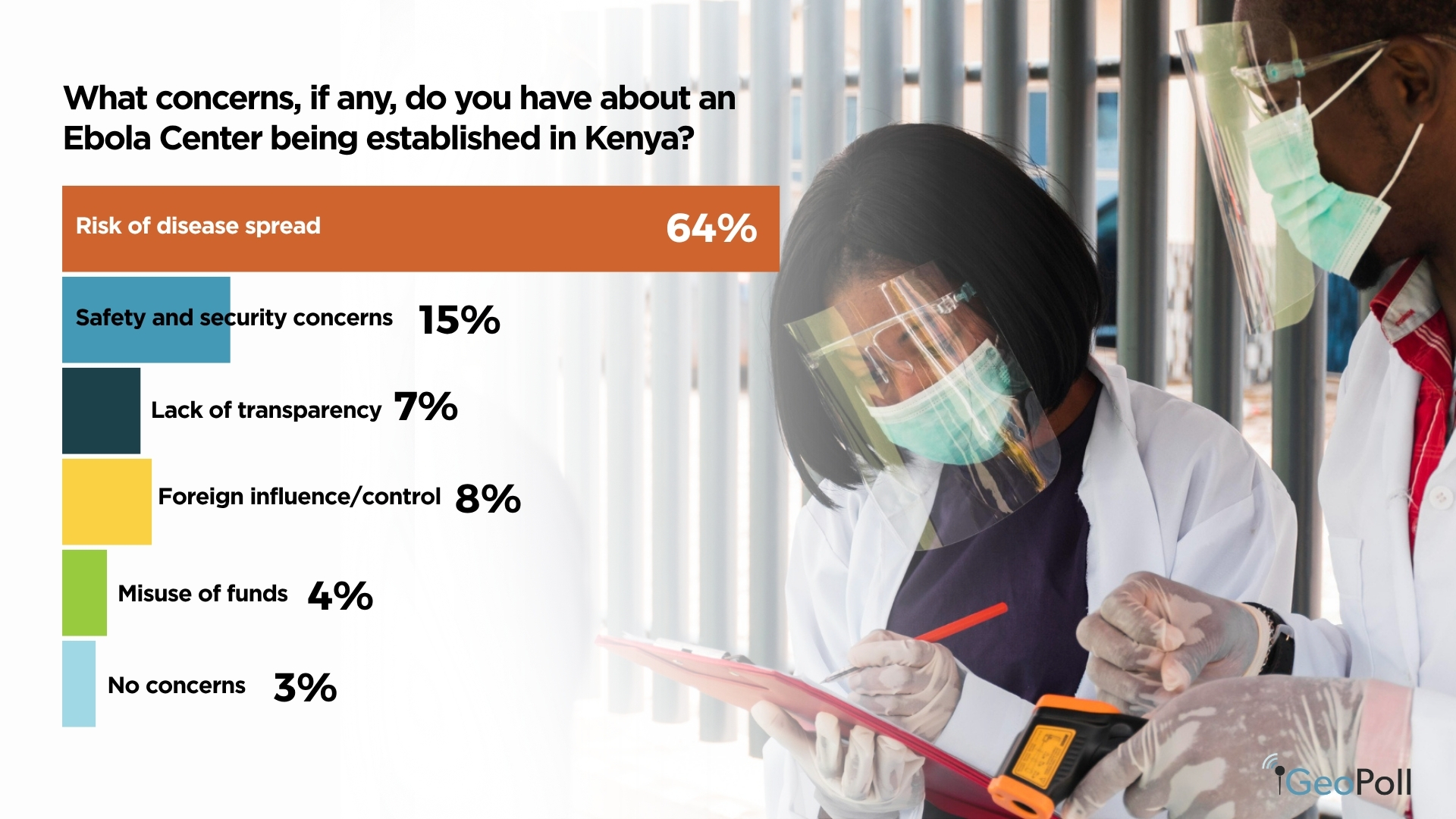
- Most respondents (64%) are specifically concerned about the risk of disease spread; safety and security concerns follow at 15%.
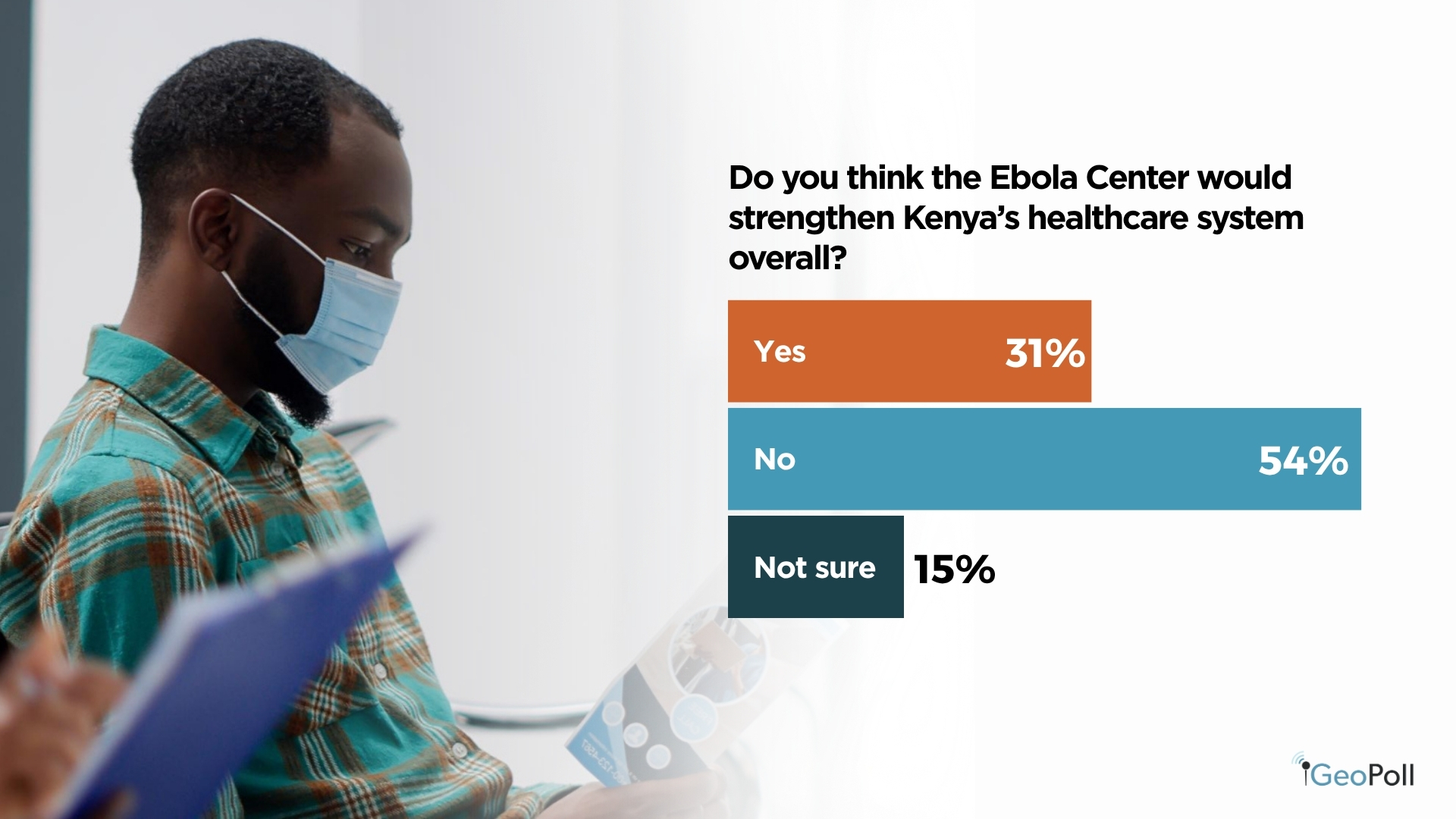
- 54% do not believe the center would strengthen Kenya’s healthcare system overall.
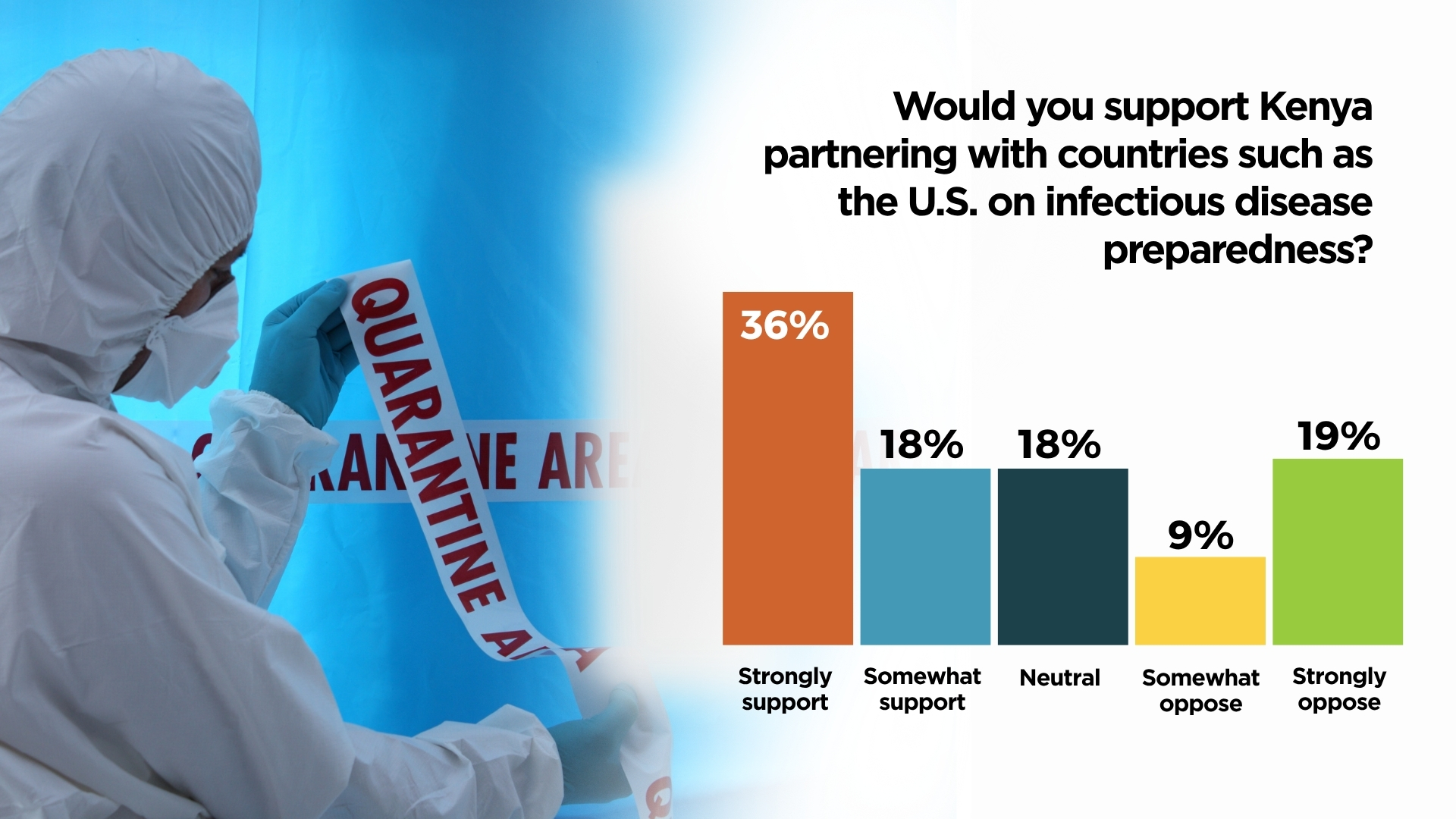
- On broader US partnership, Kenyans are more divided: 54% would support Kenya partnering with the US on infectious disease preparedness, while 28% oppose it, suggesting the objection is specific to this facility rather than to US engagement generally.
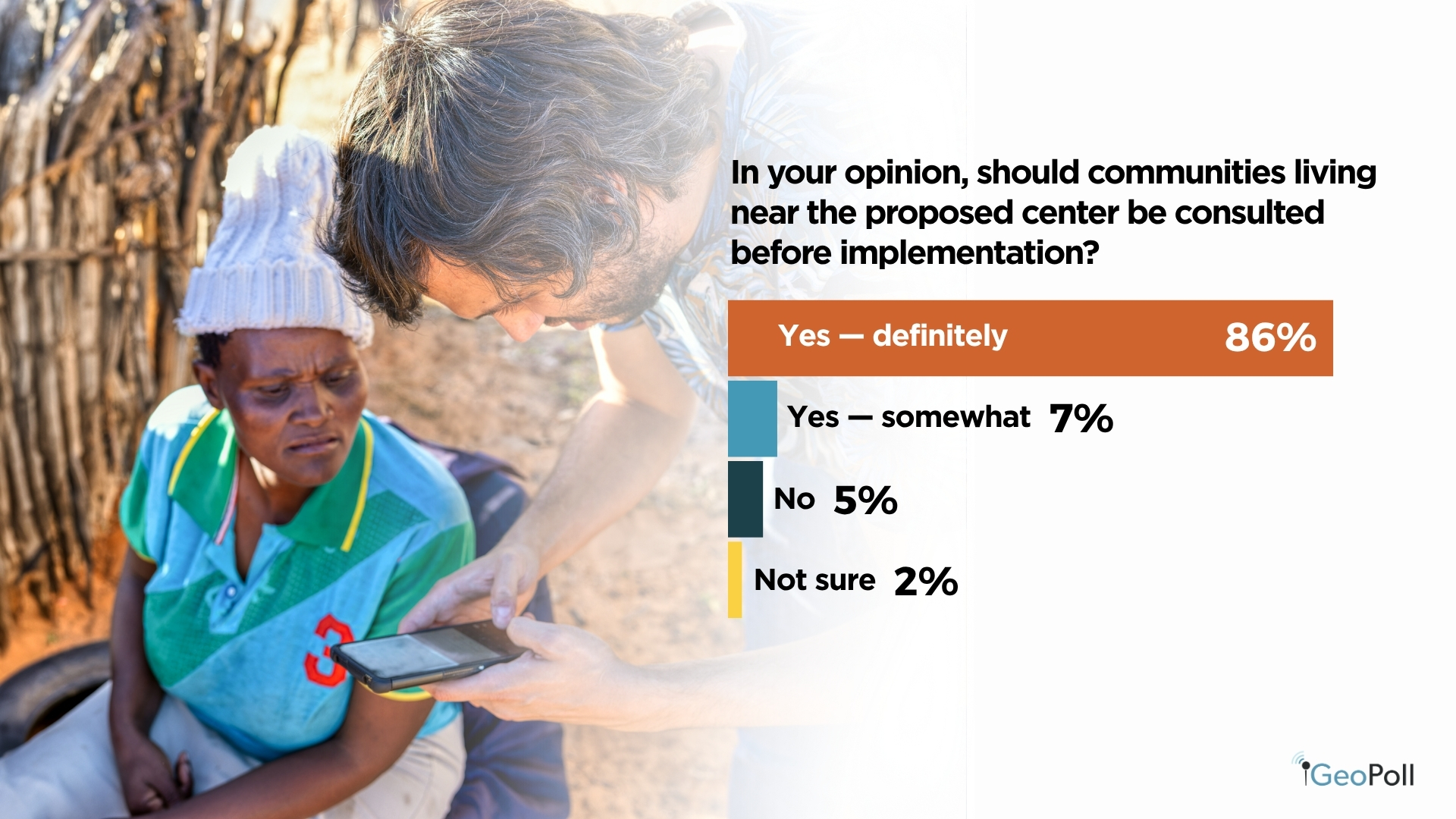
- 93% say communities near the proposed center must be consulted before implementation. 81% are very concerned about Ebola misinformation in Kenya.
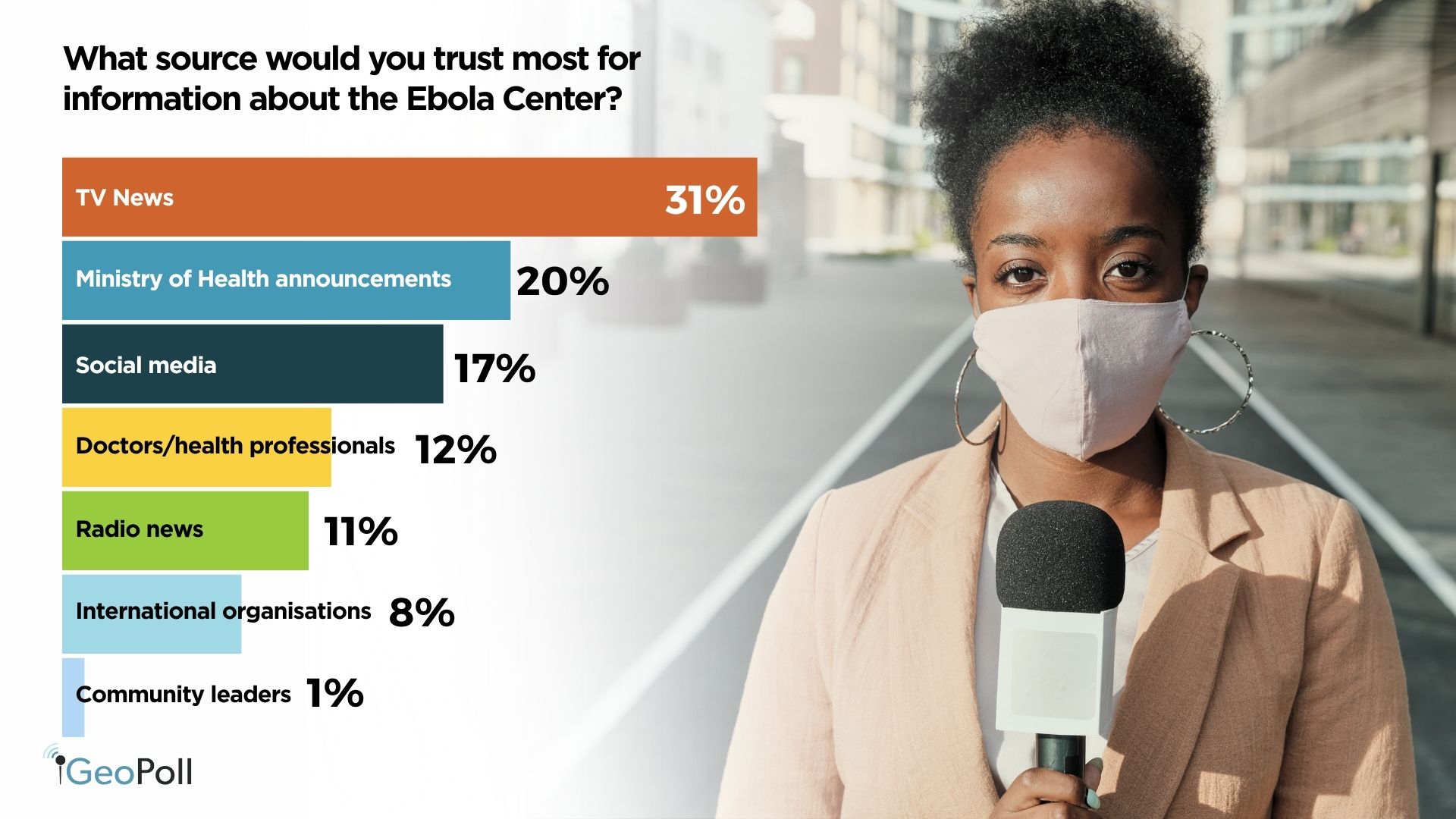
- TV News (31%), Ministry of Health announcements (20%), and social media (17%) are the most trusted information sources on the center.
Ebola Outbreak Awareness
An overwhelming 97% of respondents reported awareness of the current Ebola outbreak, while only 3% indicated they were not aware. This near-universal awareness suggests a highly informed public, indicating that opinions on the proposed quarantine facility are likely based on informed understanding rather than uninformed or reactive sentiment.
Perceived Risk to Kenya
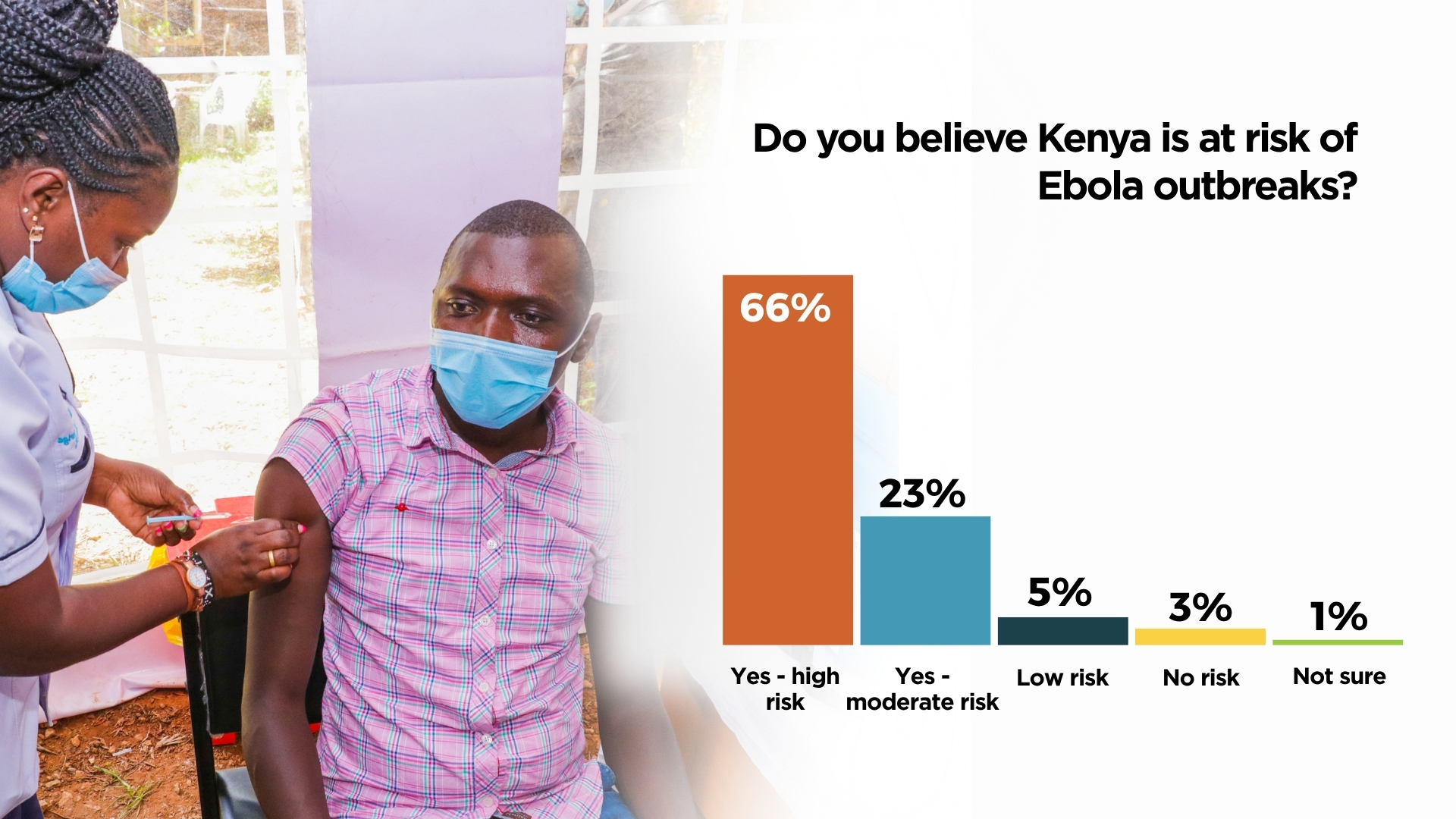
Overall, 89% of respondents believe Kenya faces some level of risk from future Ebola or other infectious disease outbreaks. Among them, 66% consider the risk to be high. Only 1% believe there is no risk. This strong perception of risk provides important context for attitudes toward the proposed quarantine facility. For most respondents, Ebola is not viewed as a distant threat limited to the Democratic Republic of Congo, but as a real and present risk to Kenya.
Against this backdrop, concerns that a US-run quarantine facility could itself become a potential source of transmission are more understandable. It also helps explain why health and safety concerns, rather than political considerations, are the primary driver of opposition.
Awareness of the Proposed Laikipia Center
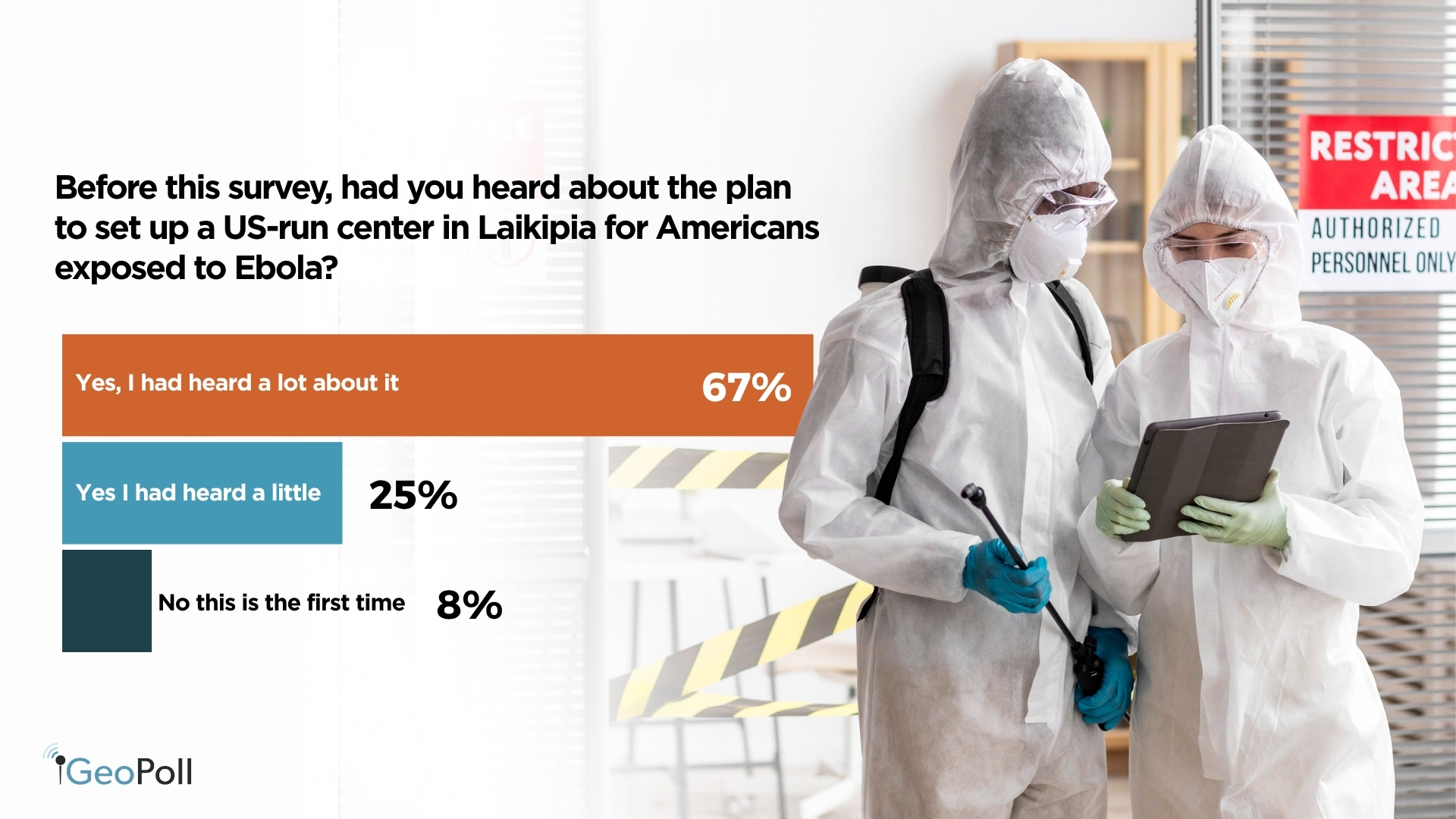
Respondents were asked whether they had heard about the proposal to establish a US-run quarantine centre in Laikipia for Americans exposed to Ebola prior to the survey. Overall, 67% reported having heard a lot about the proposal, while 25% had heard a little. Only 8% said they were hearing about it for the first time.
These findings indicate that the proposal had already achieved broad public awareness at an early stage of discussion. This level of visibility suggests the issue had moved beyond specialist health or diplomatic audiences and was already present in mainstream media and public discourse in Kenya.
Attitudes Toward the Center
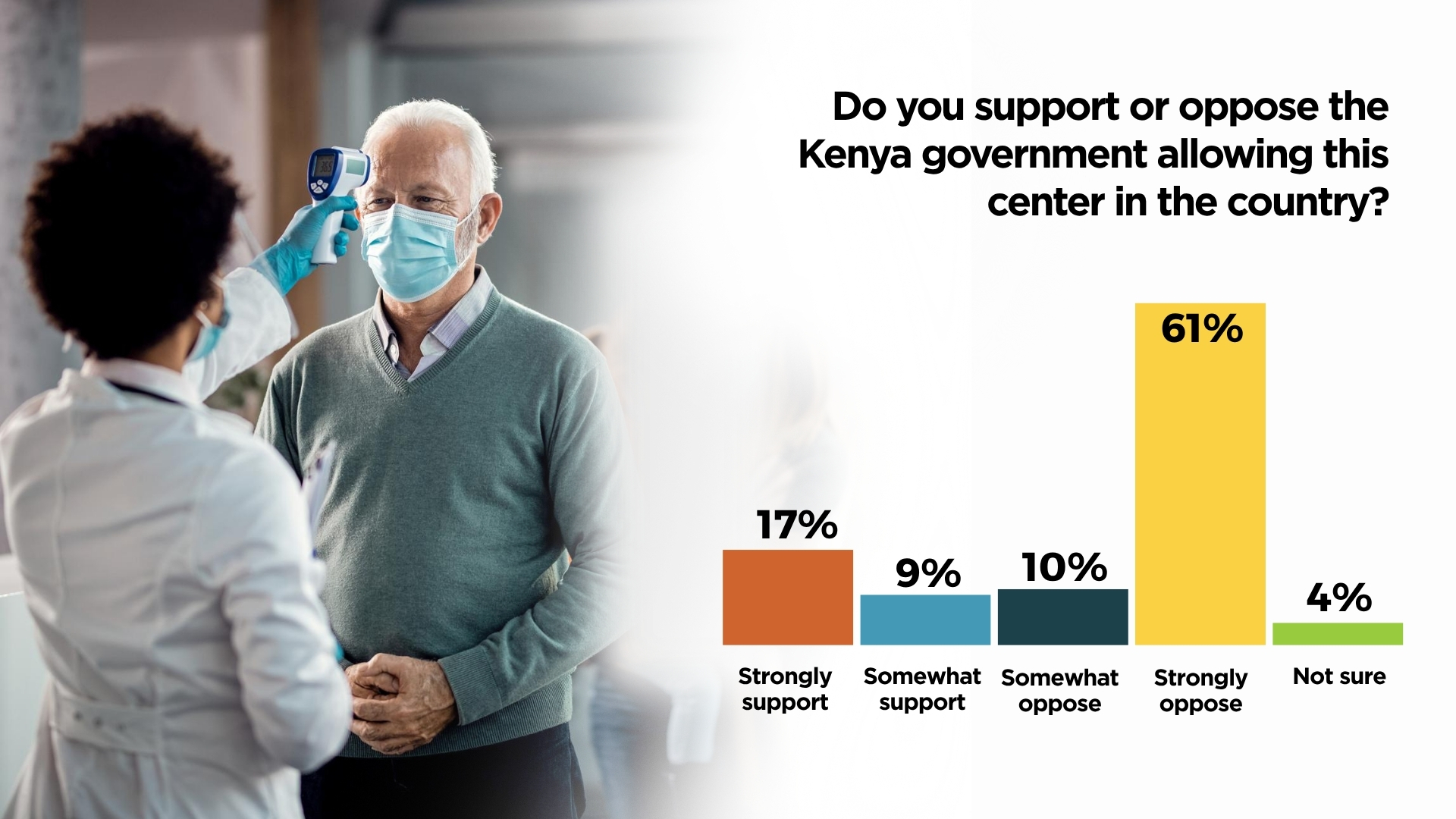
Overall, 71% of Kenyans oppose the government allowing the US-run quarantine centre. The intensity of this opposition is notable: 61% “strongly oppose” the proposal, while 10% “somewhat oppose” it. This indicates a firmly held position among a large majority, rather than a divided or uncertain public.
On the other side, 26% express support for the proposal, including 17% who “strongly support” and 9% who “somewhat support” it. A further 4% are unsure. While support is not insignificant, it remains well below majority level.
The imbalance between strong opposition (61%) and strong support (17%) points to a deeply polarized but asymmetrical sentiment, with opposition significantly more entrenched. Such strongly held views are typically less responsive to communication alone and often reflect concerns that would require substantive changes to the proposal itself to meaningfully shift public opinion.
Main Reasons for Opposition to the Proposed Ebola Facility
The dominant concern is clearly health-related. A significant share of responses (45%) point to the belief that the facility could increase the risk of Ebola spreading in Kenya. This reflects an epidemiological fear rather than a political stance, respondents are primarily worried about safety and exposure.
More secondary considerations introduce a political dimension. A smaller but notable share of responses cite concerns about national sovereignty (17%), reflecting the view that the proposal undermines Kenya’s autonomy. Another 15% feel that individuals from the US should be managed within their own country rather than through a facility located on Kenyan soil. While important, these views appear to build on top of, rather than replace, the underlying health concerns.
Among those who express support, the reasoning is similarly structured and pragmatic. Some point to potential funding opportunities and stronger bilateral ties with the United States (10%). Others highlight the value of improved preparedness and faster response to future outbreaks (6%), as well as Kenya’s potential role as a regional health hub (6%). Rather than reflecting unquestioning approval, these perspectives suggest a cost-benefit assessment that simply arrives at a different conclusion from the majority.
Specific Concerns
When asked what concerns, if any, they had about an Ebola center being established in Kenya, a clear majority, 64% pointed to the risk of disease spread as their primary concern. This is not a generalised unease, but a specific fear tied to a clearly understood mechanism of harm: the possibility of local transmission of a highly infectious disease.
Beyond this, 15% raised concerns related to safety and security, reflecting worries about the physical environment surrounding a facility associated with high-risk infectious cases. Issues such as foreign influence and control (8%) and lack of transparency (7%) follow, suggesting a secondary layer of institutional and governance-related apprehension. By contrast, only 4% cite misuse of funds, a relatively minor concern despite its prominence in broader public debates around foreign-funded initiatives.
Taken together, the pattern is striking: concerns are driven far more by health and safety considerations than by financial skepticism. Only 3% of respondents reported having no concerns at all, underscoring the extent to which the proposal has generated widespread apprehension across the population.
Impact on Kenya’s Healthcare System
Proponents of hosting the quarantine facility have argued that Kenya would benefit through broader health system strengthening, including infrastructure investment, capacity building, knowledge transfer, and an enhanced role in regional public health leadership. Yet this rationale does not appear to be resonating strongly with the public.
A majority of respondents (54%) do not believe the center would strengthen Kenya’s healthcare system. In comparison, 31% believe it would, while 15% remain undecided. The balance of opinion therefore tilts clearly toward scepticism.
This gap may reflect several underlying dynamics, from limited clarity in how the benefits have been communicated, to broader mistrust of externally driven health initiatives, or the stronger influence of prevailing concerns around disease risk. Whatever the drivers, the results point to a clear disconnect between the intended policy narrative and public perception, one that will need to be addressed more directly if support is to be built.
Most Trusted Institution for Health Emergencies
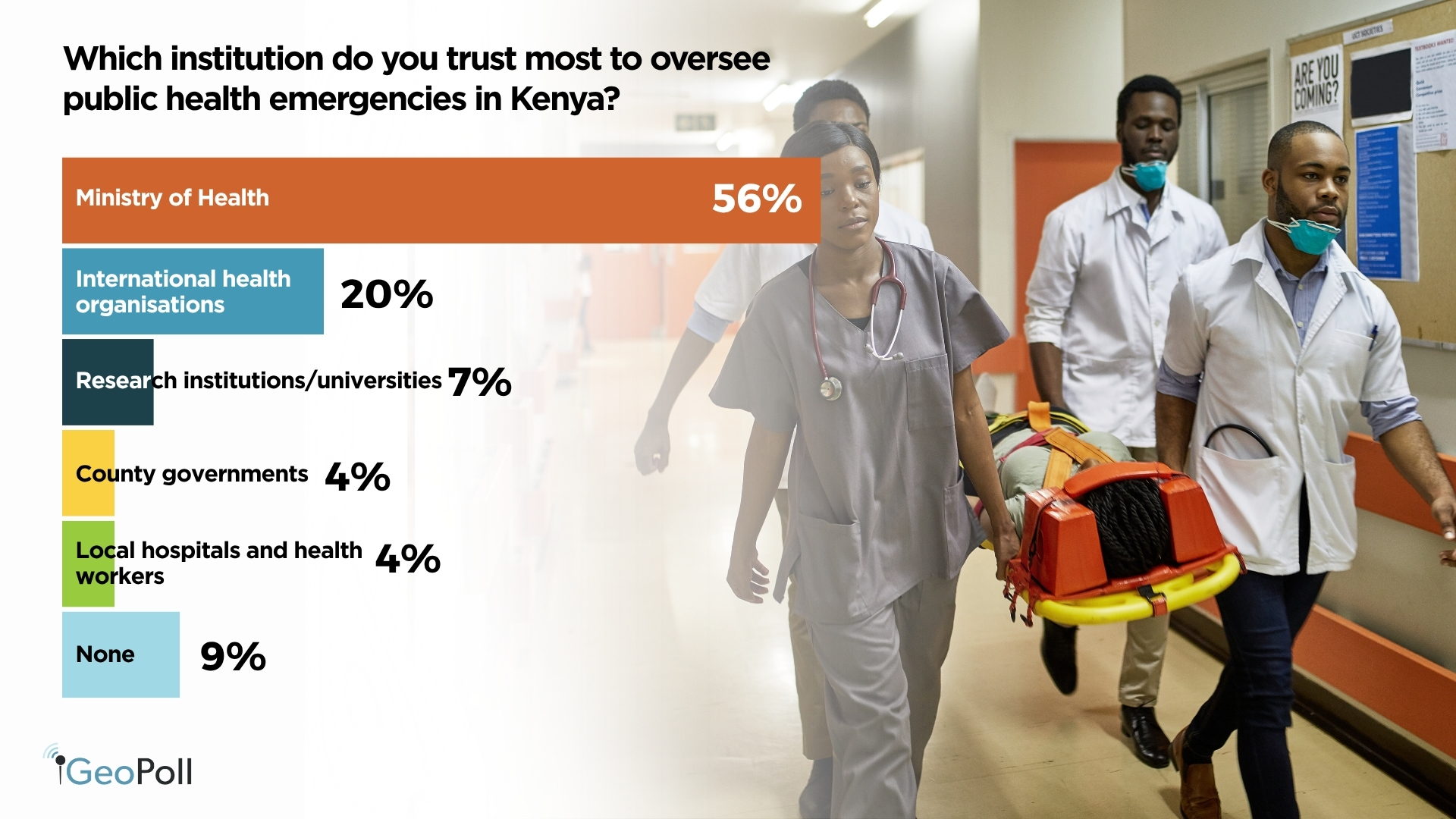
When asked which institution they trust most to oversee public health emergencies in Kenya, respondents expressed a clear hierarchy of confidence. The Ministry of Health stands out by a wide margin, selected by 56% of respondents. International health organisations, including the WHO and similar bodies, follow at 20%, while research institutions and universities account for 7%. County governments and local health workers trail at 4% each.
This pattern has direct implications for the debate around the Laikipia facility. It indicates that public legitimacy in managing health emergencies is anchored primarily at the national level, with the Ministry of Health serving as the central point of trust and authority.
The relatively low trust in county governments is also telling, particularly in the context of Laikipia as a devolved unit. It suggests that, on issues of national-scale health emergencies, respondents place significantly greater confidence in central government institutions than in county-level structures, reinforcing a preference for centralized leadership in moments of high-stakes public health decision-making.
Support for Kenya–US Partnership on Disease Preparedness
One of the most strategically significant findings from the survey is the clear divergence between opposition to the specific facility and attitudes toward broader Kenya–US health cooperation. While 71% of respondents oppose the Laikipia center, a majority (54%) support Kenya partnering with the United States on infectious disease preparedness in general, including 36% who support it strongly and 18% who support it somewhat.
By contrast, 28% oppose such broader cooperation, indicating a smaller segment of the population that takes a more categorical stance against foreign involvement in Kenya’s health infrastructure. However, this remains a minority view. Overall, the prevailing public sentiment reflects conditional openness: support for international collaboration on health security, coupled with clear resistance to this particular arrangement.
Community Consultation
On whether communities living near the proposed center should be consulted before implementation, the survey records one of its strongest areas of consensus. An overwhelming 93% of Kenyans believe consultation is necessary; including 86% who say it should “definitely” happen and a further 7% who say it should happen “somewhat.” Only 5% feel that consultation is not necessary.
This is not a contested issue in public opinion. It reflects an almost universal expectation that local communities must be engaged meaningfully before such a project proceeds.
Recent protests in Nanyuki highlight the intensity of public concern surrounding the proposed US-supported Ebola quarantine facility at Laikipia Air Base. Hundreds of residents took to the streets to oppose the project, expressing fears about potential health risks, a lack of transparency, and Kenya’s role in hosting a facility intended for individuals exposed to Ebola from outside the country. Demonstrators argued that local communities had not been adequately consulted and questioned why Kenya had been selected for the facility despite having no reported Ebola cases.
Concern About Misinformation
The misinformation findings highlight the information environment surrounding the Laikipia debate, and it is clearly a volatile one. A large majority of respondents (81%) say they are very concerned about misinformation and fear related to Ebola in Kenya, while a further 13% are somewhat concerned. Only 6% report little or no concern.
While this level of concern does not measure the actual prevalence of misinformation, or the extent to which individuals have personally encountered it, it does signal something important: the public perceives the information space around Ebola as uncertain and potentially unreliable. In such a context, trust becomes a central issue. Credible and consistent communication from key sources, particularly television news and the Ministry of Health, is therefore essential in shaping public understanding and confidence.
Most Trusted Information Sources
When it comes to trusted sources of information about the Ebola Center specifically, traditional and official channels dominate public reliance, though the distribution of trust is notably fragmented across multiple platforms.
Television news emerges as the leading source, selected by 31% of respondents, underscoring its continued centrality in shaping national-level risk perception and public debate. This is followed by Ministry of Health announcements at 20%, highlighting the importance of official government communication in providing authoritative guidance during health-related controversies.
Social media accounts for 17% of trust, reflecting its dual role as both an information source and a space where narratives about the facility are actively shaped and contested. Meanwhile, 12% of respondents rely on doctors and other health professionals, indicating meaningful — though comparatively limited — trust in clinical expertise as a source of reassurance and interpretation.
Radio news remains relevant at 11%, particularly as a secondary mass communication channel, while international organisations account for 8%, suggesting a more cautious or selective public trust in external institutional actors. Community leaders register the lowest level of reliance at just 1%, pointing to a surprisingly minimal role for local authority figures in shaping perceptions of this issue.
Taken together, the pattern reflects a public that primarily depends on national media and government messaging, while simultaneously drawing on a diverse set of secondary sources, with no single channel fully dominating the information ecosystem.
Methodology/About this Survey
This exclusive survey was powered by GeoPoll’s AI platform; Tuucho run via the GeoPoll mobile application and WhatsApp in Kenya between between 29 and 31 May 2026 the sample size was 691, composed of random users between 18 and 50. Since the survey was randomly distributed to an and the results are slightly skewed towards younger respondents. All questions were self-administered via mobile survey in English.
This study examines public perceptions in Kenya regarding the proposed US-supported Ebola quarantine facility in Laikipia, with a broader focus on attitudes toward international cooperation in infectious disease preparedness and the information environment shaping these views.
The aim is to understand how Kenyans perceive the proposed facility, the extent to which they support or oppose it, and how these views relate to broader acceptance of Kenya–US health collaboration. It also explores expectations around community consultation and the role of trust and misinformation in shaping public opinion.
Overall, the study seeks to provide insight into the balance between public health security priorities, sovereignty concerns, and trust in both government and information sources in the context of emerging infectious disease preparedness.
Please get in touch with us to get more details about our capabilities, explore more on various topics in Africa, Asia, and Latin America.