Contents

South Africa has long been a destination for migrants from across Africa and beyond, drawn by economic opportunities, education, and relative regional stability. However, migration remains a highly debated issue, often intersecting with concerns about employment, public services, crime, national identity, and incidents of xenophobia. These discussions continue to shape public opinion and influence how communities perceive the presence and contribution of foreign nationals. Recent reports and analysis from South Africa highlight the complex relationship between migration, social cohesion, and perceptions of migrants within South African communities.

GeoPoll conducted a survey in June 2026 to examine public attitudes toward foreign nationals in South Africa. The study reached 478 South Africans across urban, peri-urban, and rural areas through GeoPoll’s mobile application and WhatsApp. The sample reflects a diverse cross-section of society, including employed and unemployed respondents, younger and middle-aged adults, and residents from major urban centers as well as rural communities, providing insight into how South Africans view migration, social integration, and the role of foreign nationals in the country today.

Key Findings

  • 77% report having heard of or witnessed incidents in the past 12 months, showing that migration-related tensions are highly visible in everyday life and public discourse.
  • 75% say violence against foreign nationals is never acceptable, reflecting a strong normative rejection of violence despite ongoing tensions.
  • 54% disagree with attacks on foreign nationals, indicating general opposition to violence but also a notable level of uncertainty or weaker conviction among some respondents.
  • 41% hold a neutral overall attitude toward foreign nationals, suggesting many people are neither strongly supportive nor strongly opposed, but instead ambivalent.
  • 63% say social media is their primary source of information on incidents, underscoring its strong influence in shaping perceptions and narratives.
  • 43% believe all levels of society are responsible for improving relations, indicating only partial agreement on shared responsibility for addressing tensions.

Awareness of Incidents Involving Foreign Nationals

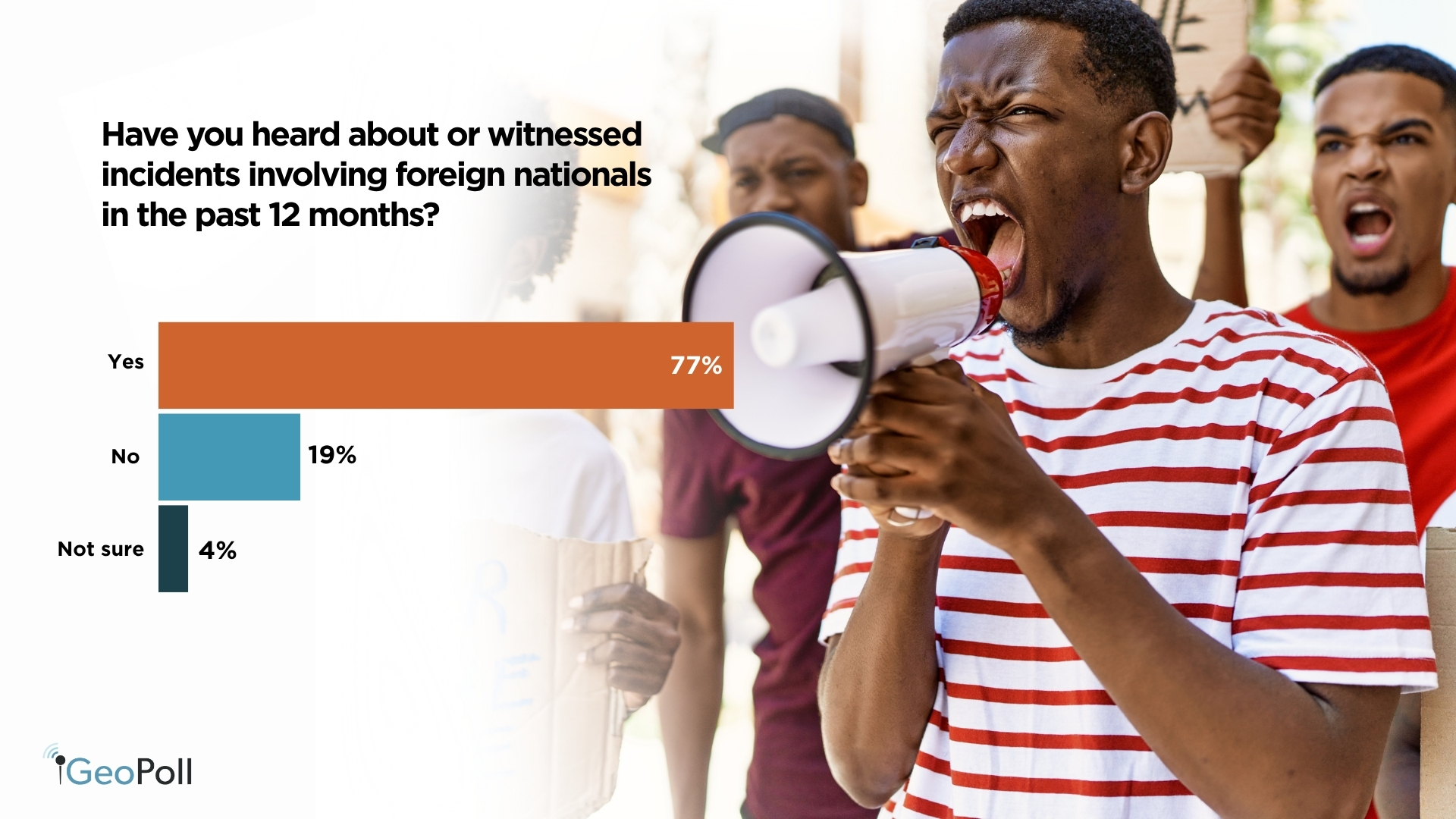
In South Africa, issues involving foreign nationals are widely known and experienced. About 77% of respondents say they have heard of or personally witnessed incidents or tensions involving foreign nationals in the past year, while only 19% say they have not.

This shows that such experiences are not rare or limited to certain areas. Instead, they are commonly seen or heard about across cities, towns, and rural communities, making them part of everyday public awareness rather than isolated events.
Source of information

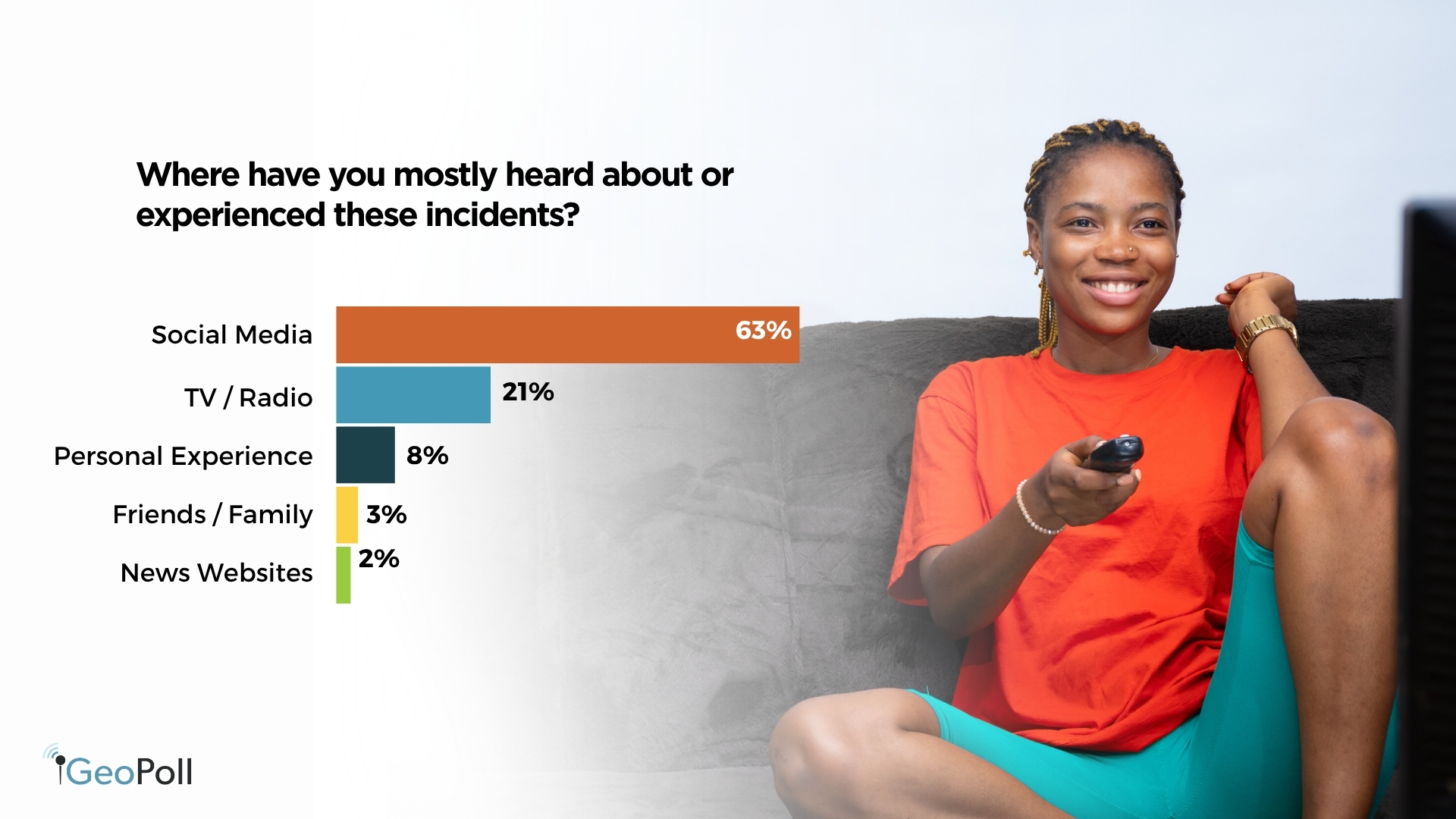
Social media is, by a clear margin, the dominant channel through which South Africans encounter information about incidents involving foreign nationals. 63% of respondents say they mainly get news and accounts of such tensions from platforms like Facebook, X (Twitter), TikTok, WhatsApp groups, and other social media platforms. These platforms combine official news, personal testimonies, commentary, and viral content, meaning that information is often fast-moving, highly visible, and shaped by both verified reporting and user-generated narratives.

Traditional media such as television and radio account for only 21% as a primary source, highlighting a significant shift away from conventional broadcast journalism. Far fewer respondents rely on direct or interpersonal channels, with personal experience cited by 8% and friends or family by just 3%. This distribution suggests that most perceptions are formed not through close personal networks or direct encounters, but through mediated digital environments where information spreads quickly and is often shaped by amplification, framing, and repetition.
Overall attitudes toward foreign nationals

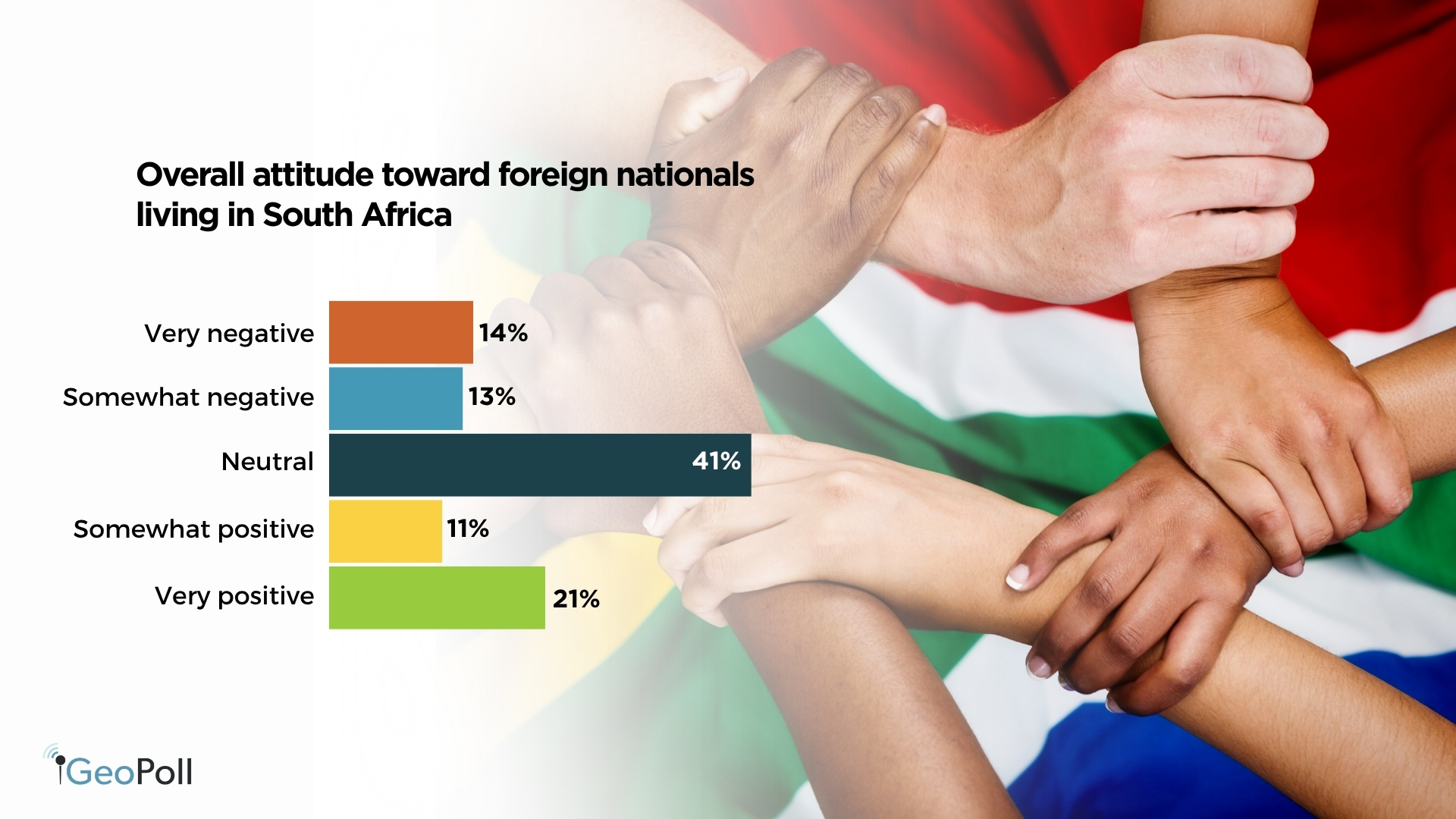
When asked to describe their overall attitude toward foreign nationals living in South Africa, the largest share of respondents, 41% identify as neutral. This is an important signal, suggesting that a significant portion of the population has not formed firm opinions and may still be open to influence, information, and changing circumstances.

Among those who do express a clearer position, positive sentiment (32% combined) slightly outweighs negative sentiment (27% combined). Rather than a strongly polarized society, the results point to a public that is divided but not fixed, where many views are still forming and are shaped by ongoing experiences, information flows, and prevailing narratives.
Comfort in everyday interaction versus perceived tensions

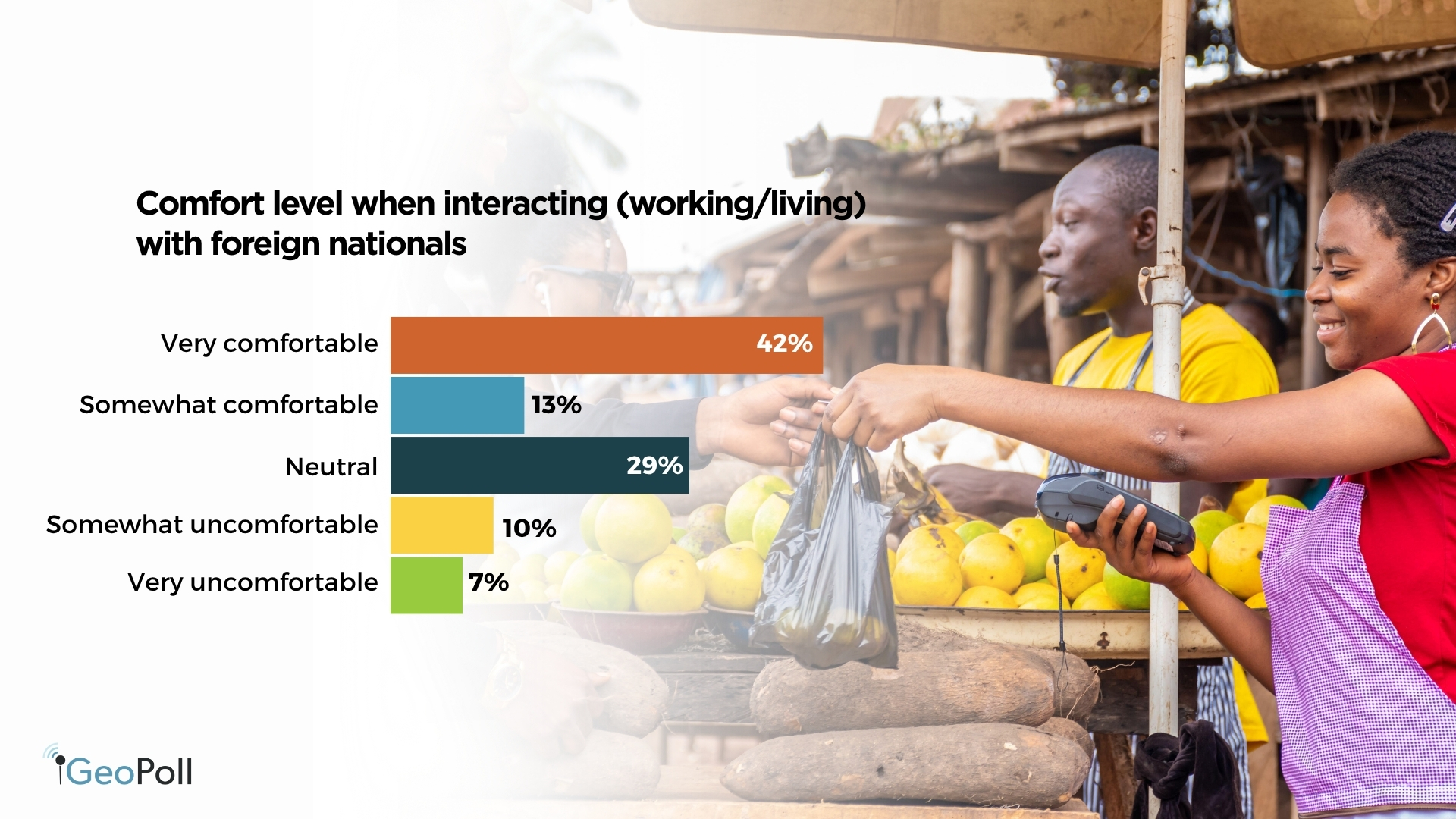
Attitudes expressed in the abstract often differ from how people respond in everyday life. When it comes to direct interaction, the survey shows a generally comfortable public. A majority of respondents (55%) say they feel very or somewhat comfortable living or working alongside foreign nationals, while 29% remain neutral. Only 17% express discomfort in these day-to-day interactions, indicating that most people do not personally resist coexisting with foreign nationals in shared spaces such as workplaces, neighbourhoods, or public services.

This creates a notable contrast with the high level of reported exposure to incidents (77%). While many people are aware of or have heard about tensions, relatively few translate that awareness into personal discomfort. The gap suggests that a significant share of perceived tension is shaped indirectly through media coverage, social media, and secondhand accounts, rather than through direct interpersonal experience.

View on job competition between South Africans and foreign nationals

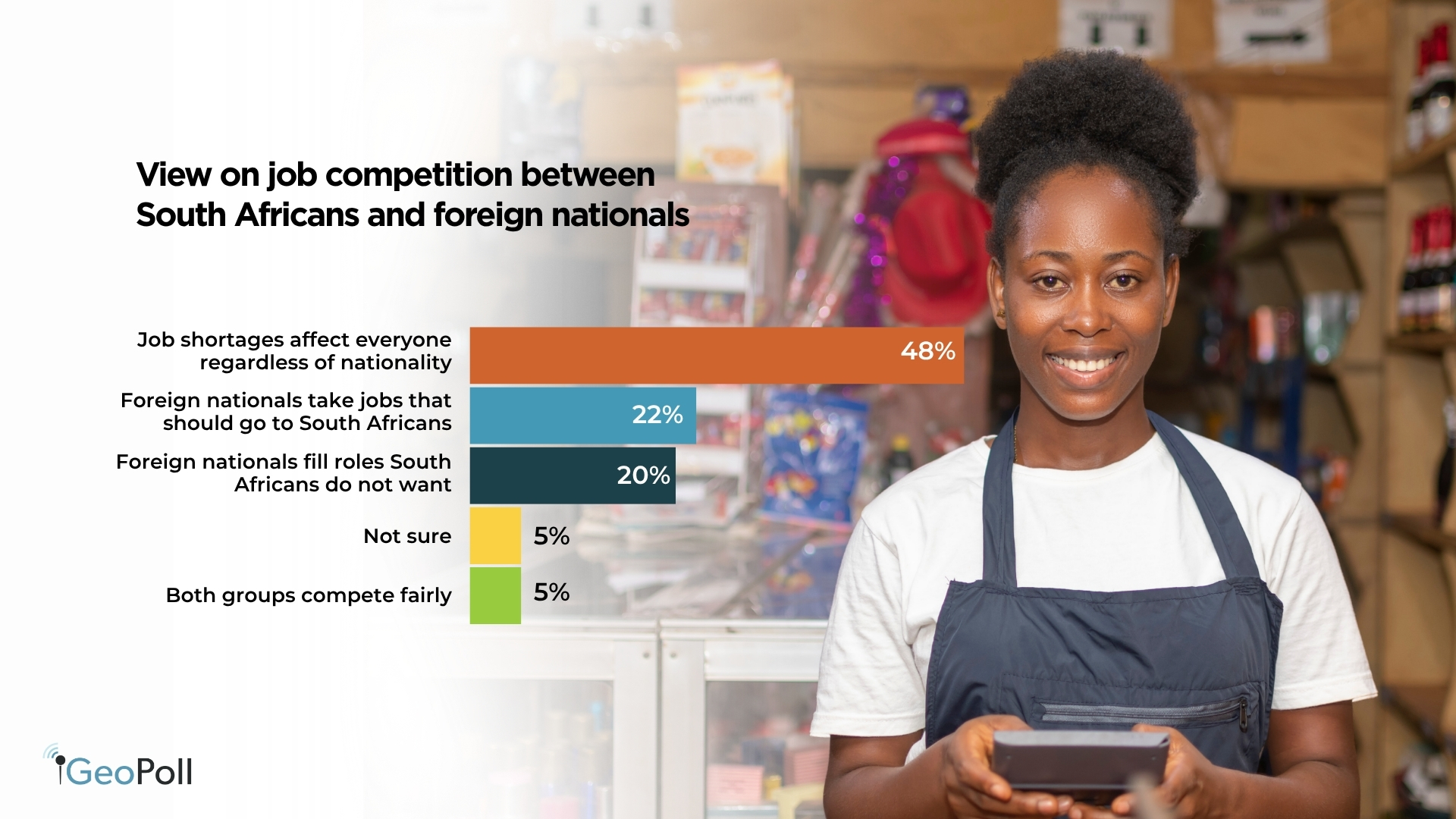
The perception that foreign nationals take jobs that should belong to South Africans is widely present in public discourse. However, the findings suggest a more nuanced understanding of unemployment. Nearly half of respondents (48%) believe that job shortages affect everyone regardless of nationality, pointing to structural economic challenges rather than attributing the problem primarily to migrants. For broader context on South Africa’s labour market conditions, official statistics from Statistics South Africa provide detailed insights into unemployment trends and labour force dynamics.

Only 22% directly associate job losses with foreign nationals, while 20% believe that foreign nationals often occupy roles that South Africans are less willing to take. This indicates that although economic frustration is significant in a context of persistently high unemployment, it is not predominantly channelled into migrant-blaming narratives. Instead, many respondents appear to interpret unemployment as a broader systemic issue. This suggests that policy responses focused on job creation, skills development, and economic growth are more likely to address underlying tensions than approaches that place responsibility on migrant populations.

Attitudes toward violence against foreign nationals

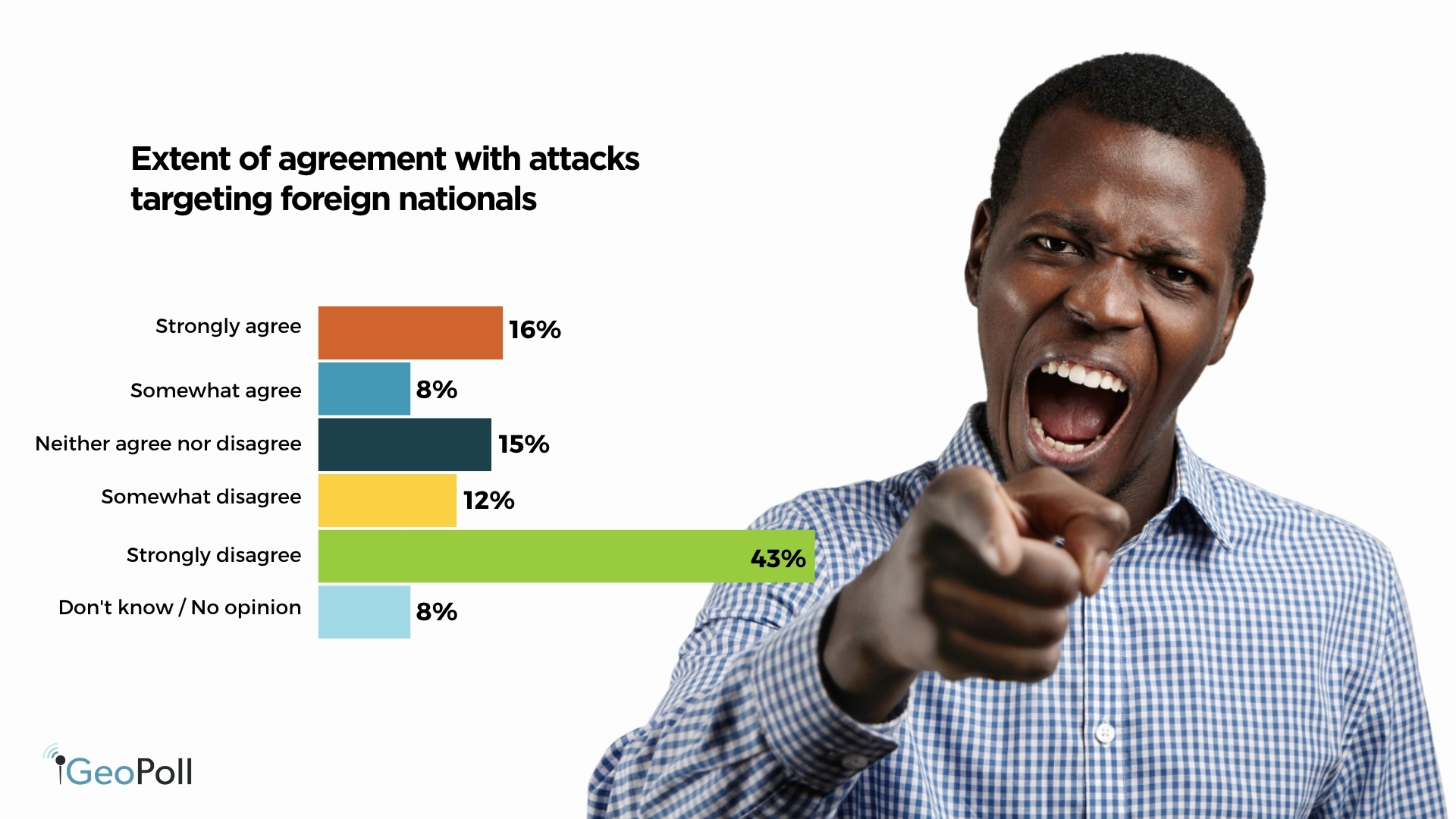
One of the clearest findings in the survey relates to attitudes toward violence. A majority of respondents (55%) disagree with attacks targeting foreign nationals, including 43% who strongly disagree, indicating a firm rejection of violence among most South Africans. A further 15% are undecided or hold no clear opinion, suggesting some level of ambivalence but not active support for violence.

Only 24% express any level of agreement with such attacks, with 16% strongly agreeing. However, this does not necessarily translate into willingness to participate in or organise violence; it more likely reflects opinion rather than action. Overall, the dominant position is clear and consistent: most respondents reject violence against foreign nationals, and this rejection is held with notable conviction.

Views on whether violence can ever be justified

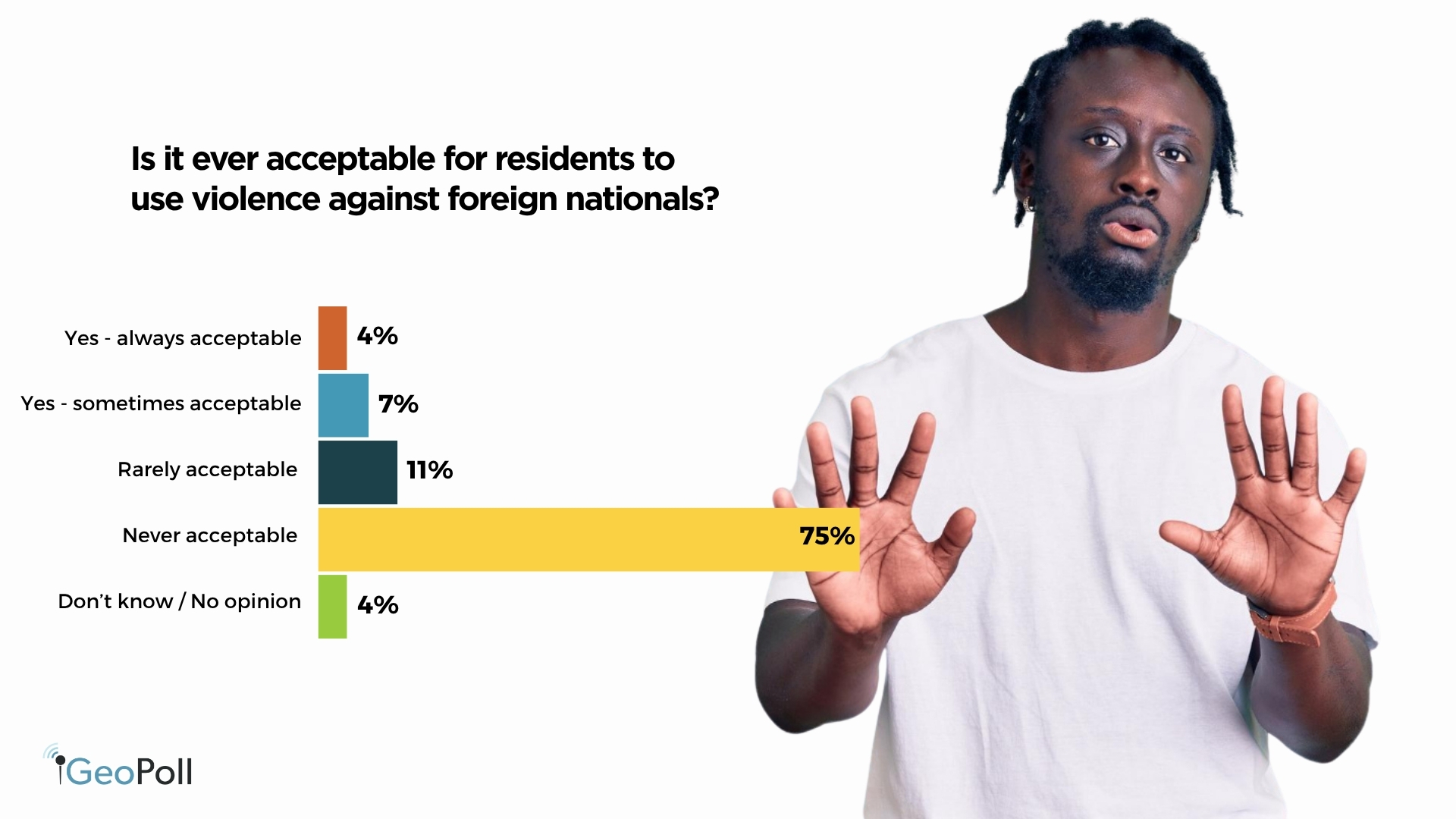
The question of whether violence is ever justified produces one of the strongest points of consensus in the survey. A clear majority (75%) say it is never acceptable for South African residents to use violence against foreign nationals in their communities, while only 4% believe it is always acceptable.

This makes it one of the most decisive findings in the study. It shows that rejection of violence is not conditional or situational for most respondents, but a firmly held principle. This provides a strong basis for stakeholders, community leaders, policymakers, and communicators, to build on, as the overwhelming majority already agree on the fundamental norm that violence against foreign nationals is not justified.

75%  say violence against foreign nationals is never acceptable, the strongest single consensus across the survey

Views on protests and demonstrations targeting foreign nationals

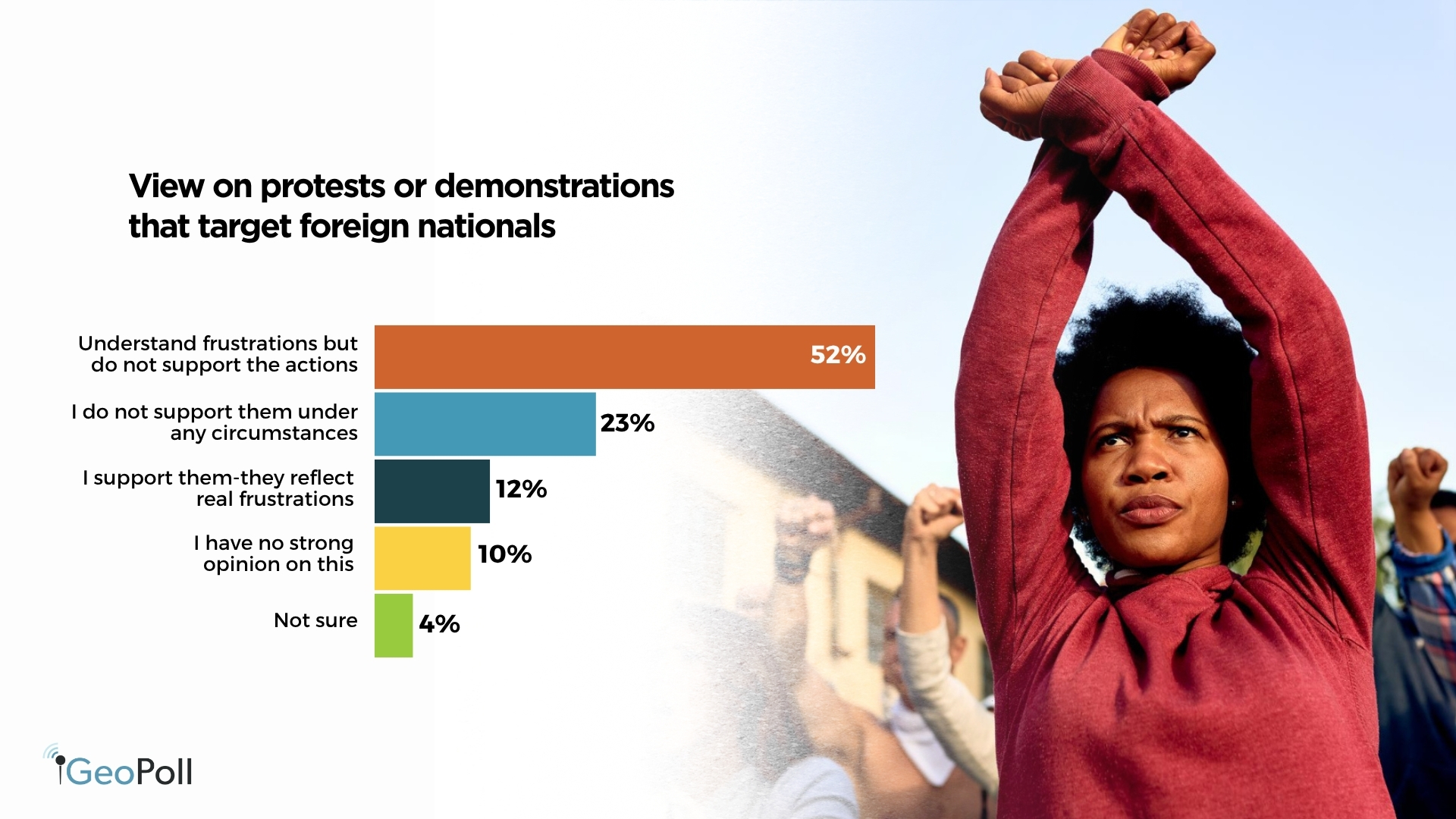
Attitudes toward protests and demonstrations targeting foreign nationals are marked by a clear sense of nuance. Just over half of respondents (52%) say they understand the frustrations that lead to such protests, but do not support the actions themselves. A further 23% reject targeted demonstrations outright, regardless of the circumstances, while only 12% express active support for them.

This pattern points to a population that can recognise underlying grievances without endorsing all forms of expression. In other words, there is a distinction between acknowledging perceived problems and approving of the methods used to respond to them. This creates an important opening for communicators and civil society actors, as it suggests that while frustrations exist, there is also broad space for reinforcing non-violent and constructive channels for expressing them.

Perceived drivers of tension between South Africans and foreign nationals

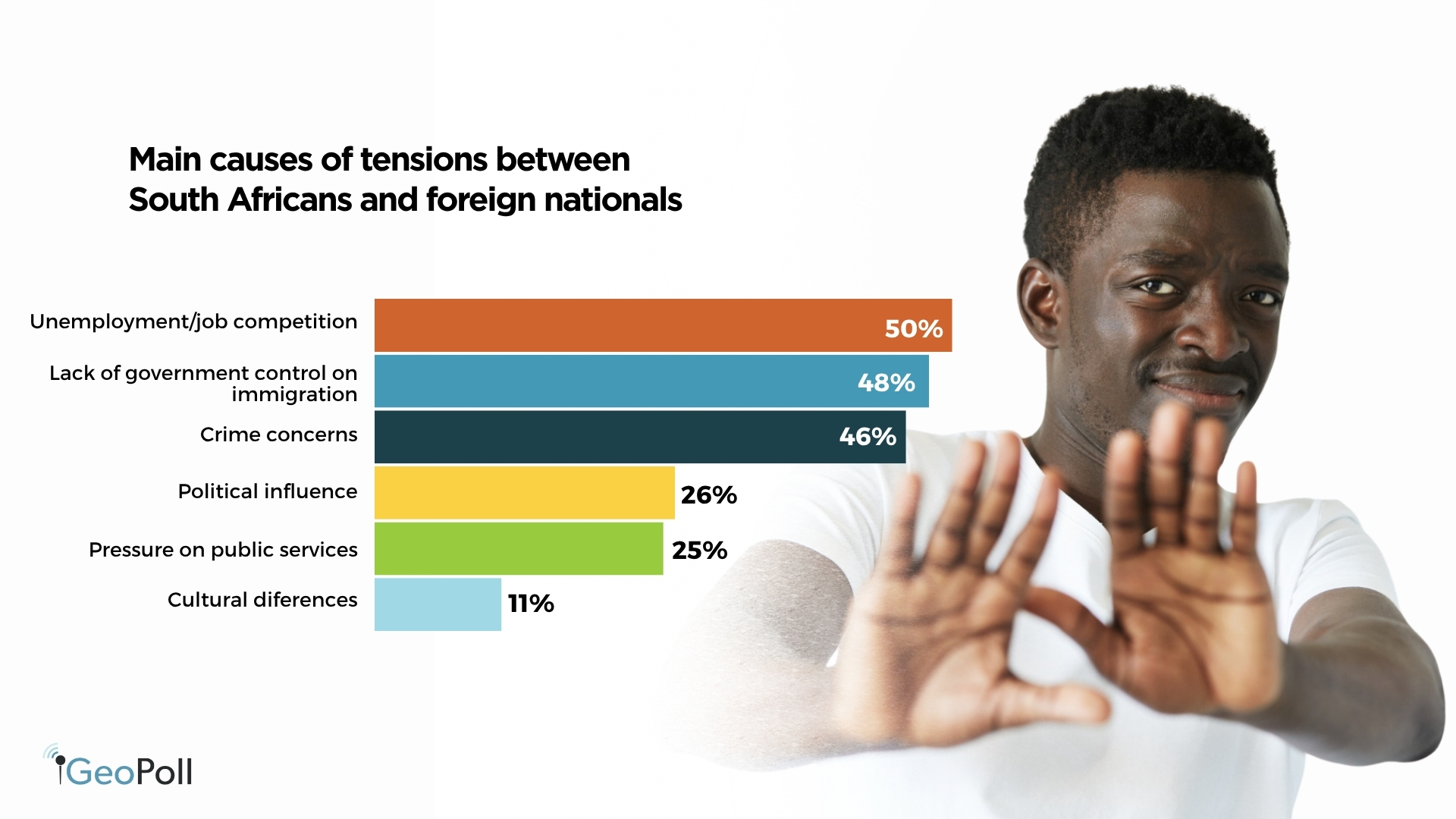
When asked to identify the main causes of tensions between South Africans and foreign nationals (selecting up to three options), respondents overwhelmingly point to economic and governance-related factors. Unemployment and job competition lead the list at 50%, closely followed by perceptions of weak government control over immigration at 48%, and concerns about crime at 46%. Together, these responses highlight that tensions are largely rooted in material conditions and state capacity rather than social differences.

Other factors are mentioned less frequently but remain notable. Political influence is cited by 26% of respondents, while pressure on public services such as healthcare, housing, and infrastructure is selected by 25%. Cultural differences, often assumed to be a primary driver of hostility, are cited by only 11%, suggesting they play a relatively minor role in shaping perceptions compared to economic and institutional concerns.

Proposed solutions to improve relations

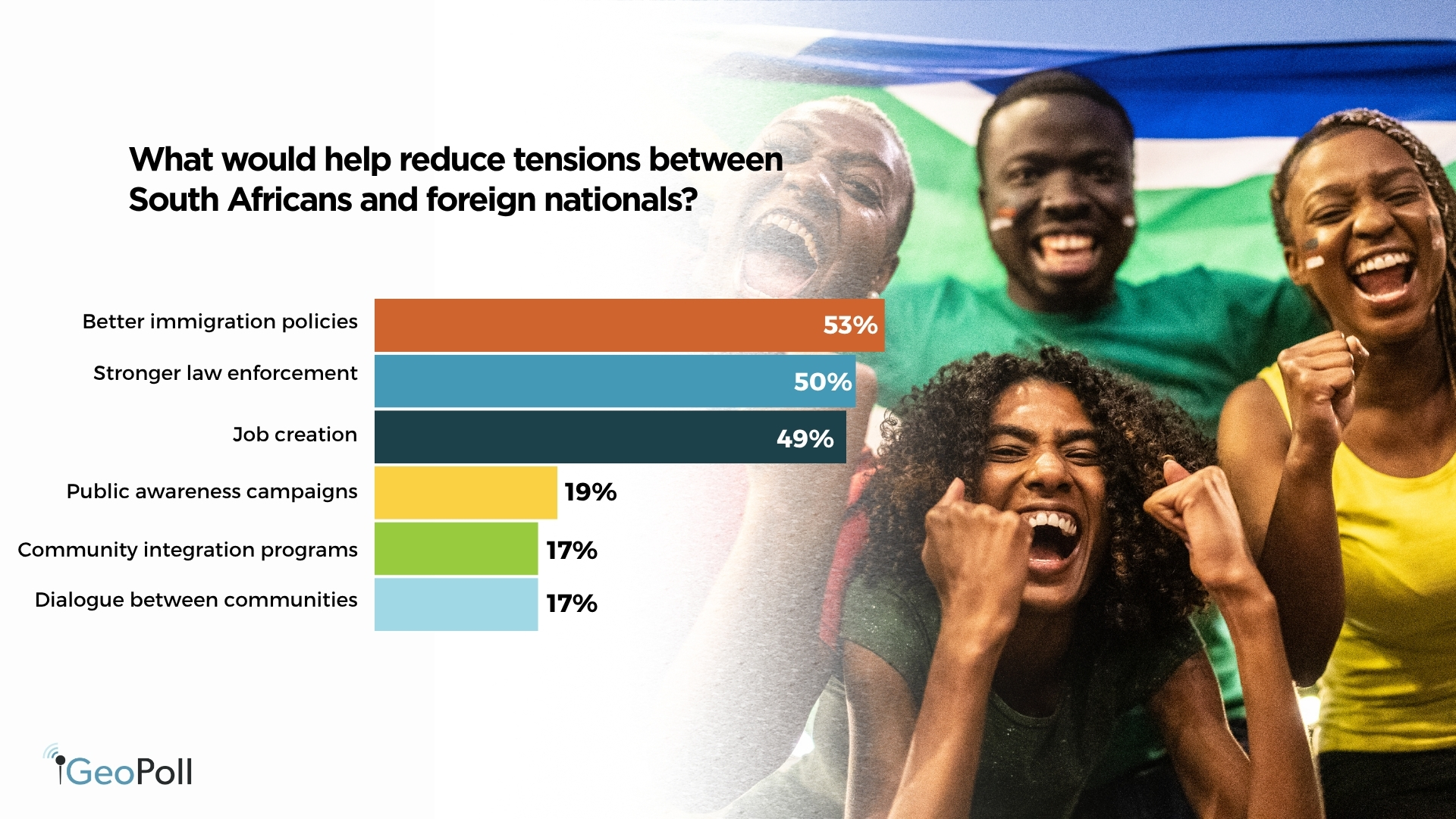
Respondents’ preferred solutions closely reflect the challenges they believe are driving tensions. Better immigration policies emerge as the most frequently cited response (53%), followed by stronger law enforcement (50%) and job creation initiatives (49%). The strong support for these measures suggests that many South Africans view tensions through a structural lens, believing that government action on migration management, public safety, and economic opportunity is key to addressing underlying concerns.

Community-based approaches receive lower levels of support but remain important. Public awareness campaigns are endorsed by 19% of respondents, while integration programmes and dialogue between communities are each selected by 17%. Although these interventions attract less support than policy and economic solutions, they play a critical role in fostering understanding, reducing misconceptions, and building trust between communities. The findings suggest that the most effective path forward is likely a balanced one, combining government-led efforts to address economic and governance challenges with community-driven initiatives that promote social cohesion and constructive engagement.

Responsibility for improving relations

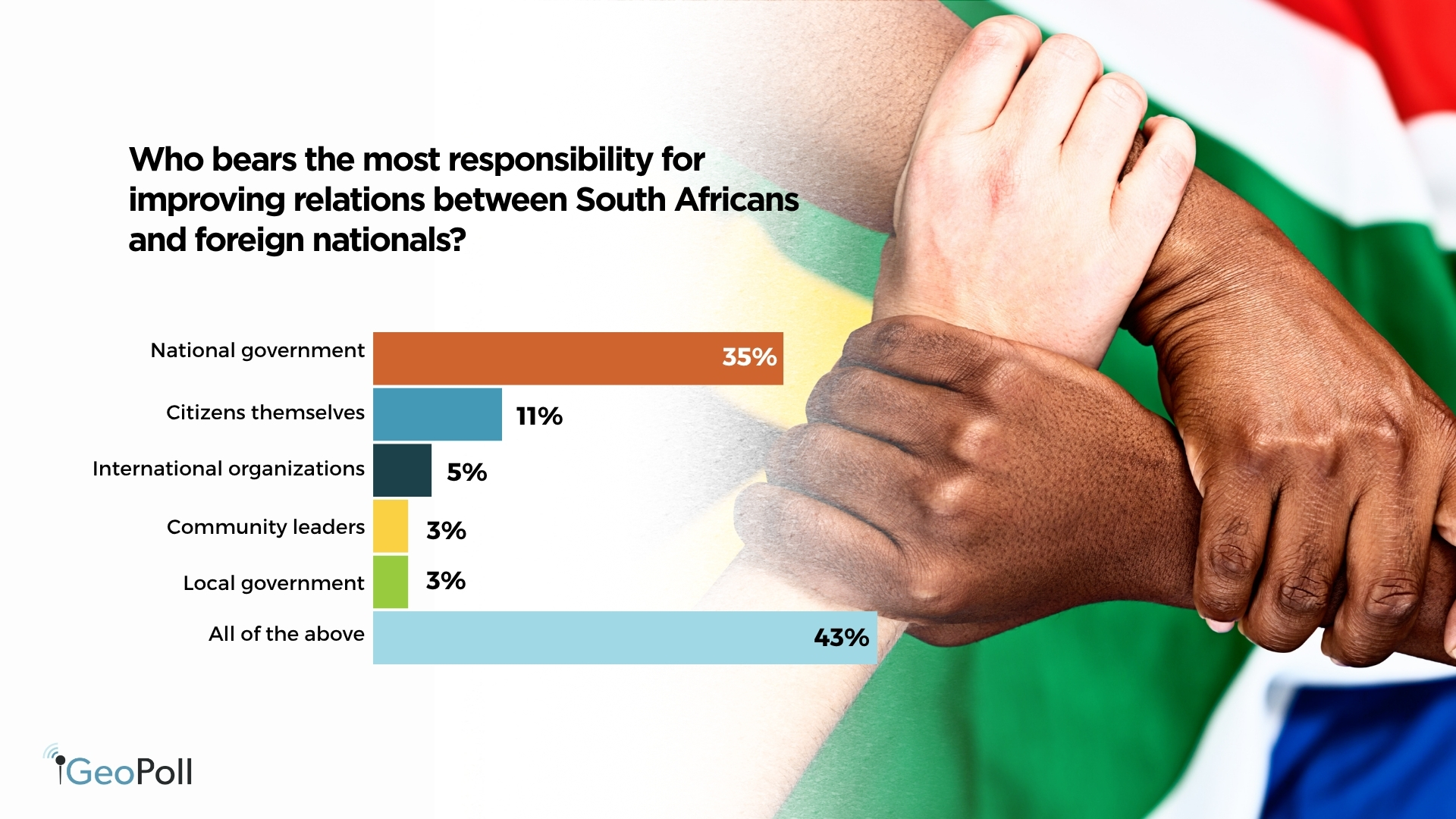
When asked who bears the greatest responsibility for improving relations between South Africans and foreign nationals, the largest share of respondents (43%) selected “all of the above,” indicating a belief that the responsibility is shared across government, communities, civil society, and individuals. This suggests that many South Africans view the issue as a collective challenge that cannot be solved by any single actor alone.

Among those who identified one primary stakeholder, the national government was the most frequently cited (35%). This reflects expectations that policymakers and public institutions should take the lead through effective immigration management, law enforcement, economic development, and public leadership. Citizens themselves were mentioned by 11% of respondents, highlighting an awareness that everyday interactions, attitudes, and community engagement also play an important role in shaping relations. Together, these findings point to a broad recognition that lasting progress will require both institutional action and individual responsibility.

At a glance

The data paints a picture of a nation grappling with a complex social issue rather than one driven by hostility. A significant majority of respondents (77%) report having heard of or witnessed incidents involving foreign nationals within the past year. This level of awareness suggests that tensions surrounding migration are not remote or isolated events; they are part of everyday conversations, media coverage, community experiences, and, for some, direct personal encounters.

Yet, despite this widespread exposure, most South Africans reject violence as a response. Three-quarters (75%) say that violence against foreign nationals is never acceptable, while 54% explicitly oppose attacks targeting them. This contrast is one of the survey’s most important findings. It reveals a society that is highly aware of migration-related tensions but largely unwilling to endorse violent action. The coexistence of concern and restraint, frustration and rejection of violence, underscores the nuanced nature of public sentiment and highlights the distinction between recognizing a problem and supporting harmful responses to it.

Methodology/About this Survey

This exclusive survey was powered by GeoPoll’s AI platform; Tuucho run via the GeoPoll mobile application and WhatsApp in South Africa between between 10 and 16 June 2026 the sample size was 478, composed of random users between 18 and 50. Since the survey was randomly distributed to an and the results are slightly skewed towards younger respondents. All questions were self-administered via mobile survey in English.

This study explores South African attitudes toward foreign nationals, examining public perceptions, sources of information, drivers of tension, and views on potential solutions.

The findings suggest that concerns are driven more by economic pressures, unemployment, crime, and perceptions of immigration management than by cultural differences. Respondents largely support structural solutions such as improved immigration policies, stronger law enforcement, and job creation, while also recognizing the importance of community engagement and shared responsibility in improving relations. Overall, the study highlights a public that is concerned about migration-related challenges but remains broadly opposed to violence and open to constructive solutions.

Please get in touch with us to get more details about our capabilities, explore more on various topics in Africa, Asia, and Latin America.