The post Nicolette Lok on the Future of Mobile in Emerging Markets appeared first on GeoPoll.
]]>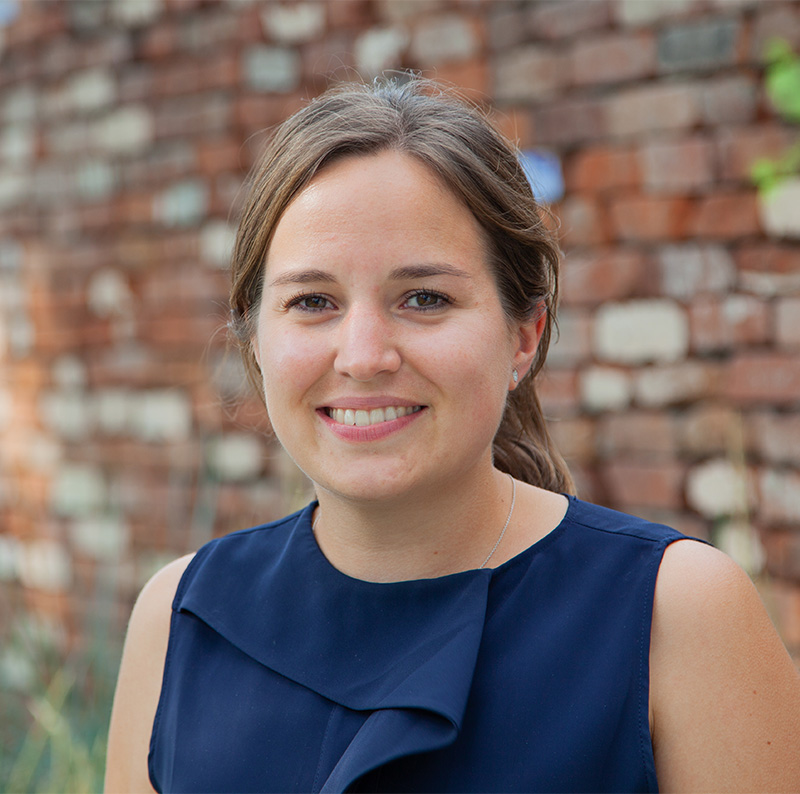 Nicolette Lok is GeoPoll’s Vice President of Operations, and oversees all of GeoPoll’s backend operations, including survey administration, building new technology tools, managing our integrations with mobile network operators, and keeping all of our systems running. Below is an abbreviated version of a conversation she had with Roxana Elliott, Vice President of Marketing, about her experience in the telecommunications sector in Africa, work at GeoPoll, and where mobile technology will go next.
Nicolette Lok Interview
Roxana Elliott: Thanks for taking the time to speak with me today! Let’s get right into it – can you tell me a bit about your background before you came to GeoPoll?
Nicolette Lok: Of course, prior to joining GeoPoll I came from the telecom industry, and spent my whole telecom career in IT– first with Celtel in the Netherlands, then with Zain Group in Bahrain which sold its Africa operations to Airtel. In 2010 I moved to Nairobi with Airtel and was with them until I joined GeoPoll. At Celtel I started in IT support and then moved to program management, eventually leading the program management office for IT and becoming the IT Delivery Controller and Business Analyst to the CIO. My role included working with vendors such as IBM amongst others, on transformation programs, other IT strategic programs, and operational issues for 17 countries across Africa. Some of the projects I worked on were the post-paid billing system and airtime distribution platforms.
Roxana Elliott: How did you come to join GeoPoll after working in the telecom sector?
Nicolette Lok: I knew of GeoPoll and Mobile Accord (GeoPoll’s parent company) because GeoPoll had been working with Airtel integrating into their messaging and prepaid systems. I didn’t know much about market research but was very interested in GeoPoll’s goals around social impact and development, and was doing my MBA at the time and was interested in going to work for a startup.
Working in telecommunications in Africa, I had seen that one of the biggest drivers of actual change in terms of improving standards of living was the telecommunication companies and what they were doing by enabling communications and providing mobile money services and other tools that people didn’t have before. Knowing that GeoPoll was trying to use data to help people around the world was a big reason I joined.
 RE: When you first came to GeoPoll what were you working on, and how has your role evolved?
NL: I came to GeoPoll in 2015 to help with GeoPoll’s integrations with the SMS messaging and prepaid billing systems for the mobile network operators we worked with. I helped reduce our turnaround time for adding new countries to our system, and soon Nick (Becker, GeoPoll’s current CEO and CTO at the time) approached me about taking on our TechOps and growing that team. Eventually I took over our survey operations as the teams all worked closely together, and worked to put processes and policies into place to drive further efficiencies within and between the teams. Now we have brought all of GeoPoll’s operational aspects under one umbrella, so I manage all of our survey and technology operations, including our product and QA teams.
RE: You definitely keep busy! Is there anything that has surprised you about working here?
NL: The eagerness and willingness everyone at GeoPoll has to make something work – coming from a large, bureaucratic company, there was a lot of red tape to getting things done. At GeoPoll I can give anything to our teams, both on the technology and operations side, and they will make it work. There’s very much a ‘where there’s a will there’s a way’ attitude, and it’s wonderful working with a team like that.
RE: Are there any favorite projects you’ve worked on at GeoPoll?
NL: Recently we did a complete redevelopment of our end user application. I knew we were capable of doing it but being able to start with a clean slate and collaborate with teams from product to tech and marketing on the overhaul was a great experience. It was a long journey but the learnings we got out of it were so valuable and we have improved the experience for our end users as a result.
RE: Where do you think the mobile technology industry is going, particularly in emerging regions?
NL: If you look in emerging regions, the lack of infrastructure means that mobile is even more important than in Europe and the Americas – people don’t have access to laptops as much, so your lifeline is your mobile phone. That reliance on mobile is true no matter where you are if you compare now to 10 years ago, but in Africa and Asia the mobile phone has opened up so many opportunities to connect with people and get access to services. Telecommunications companies have had to add so many value-added services to compete with each other, so now people have access to mobile money services, internet bundles, mobile farming services, and more – and all of this is happening in countries where access has typically been so difficult because of the lack of infrastructure. Who knows what mobile phones will look like in the future, but everything is moving to mobile in terms of personal development, access, and business services.
RE: Ok last questions: What are some things about yourself not everyone might know and what do you do outside of work?
NL: People always think I’m American but I’m actually half-Dutch and half-Chilean. I’m based in the Netherlands now but have always moved around a lot and didn’t really have one ‘home’ – I was born in Germany, and lived in Chile, Zimbabwe, Switzerland, Bahrain, and most recently Kenya. I love being outdoors, travelling and meeting new people, and going on hikes and walks with my dog Pablo.
The post Nicolette Lok on the Future of Mobile in Emerging Markets appeared first on GeoPoll.
]]>The post Mobile Applications and Data Costs in South Africa appeared first on GeoPoll.
]]>
South Africa is one of the biggest adopters of mobile technology in sub-Saharan Africa, with higher rates of smartphone adoption than in most other countries in the region. A study by Pew Research in 2018 found that 51% of adults in South Africa own smartphones, and an additional 40% own a basic mobile phone. In terms of total numbers, it has been found that there are 46.9 million smartphone subscriptions in South Africa, which accounts for users who have multiple phones. As smartphone penetration continues to grow in South Africa, so does the development and use of smartphone apps for messaging, transportation, streaming, and more.
Despite high rates of smartphone adoption, South Africa is plagued by high data costs which have resulted in protests and fierce competition between the country’s leading mobile network operators including MTN and Vodacom. It has been found that data costs in South Africa are more expensive than those found in other sub-Saharan African nations including Kenya, Nigeria, and Ghana. In December 2019 a report by the Competition Commission highlighted the price disparities between countries, and stated that poorer customers are forced to buy smaller data packages due to cost, limiting their capabilities. Given that a majority of mobile users in South Africa are using mobile phones as their primary way to access the internet, the high costs of data remain a challenge for many.
In order to better understand how South Africans are using their phones, what features and applications they use most often, and how much they are paying for mobile services each month, GeoPoll conducted a study with 400 South Africans via mobile web link.
The post Mobile Applications and Data Costs in South Africa appeared first on GeoPoll.
]]>The post Which are the Best Telecom Operators in Sub-Saharan Africa & How are They Working to Improve Service Delivery? appeared first on GeoPoll.
]]>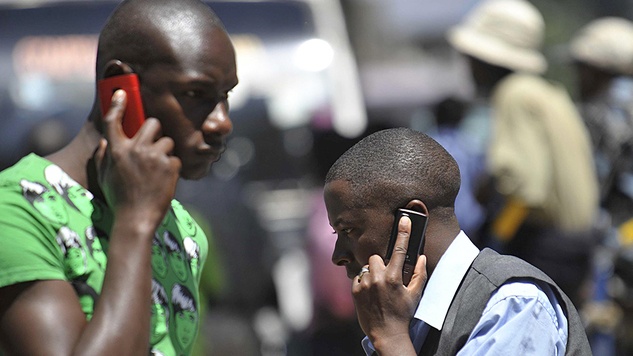 The telecom operators with the most active customers are MTN in Ghana and Nigeria, Safaricom and Vodacom in Kenya and South Africa respectively and Airtel in Uganda, according to a recent GeoPoll straw poll, which sought to determine the level of customer service and service delivery among telecommunications operators Sub-Saharan Africa.
The rate of mobile phone and internet penetration in Sub-Saharan Africa (SSA) continues to grow. According to the According to the Mobile Economy Sub-Saharan Africa 2017 report by GSMA, at the end of 2016, there were 420 million mobile subscribers in SSA; the region continues to grow faster than any other region. The same report projects that the region will have more half a billion subscribers by 2020. At the heart of this growth are the telecom operators.
Our straw poll had 2,700 respondents in 5 different Sub-Saharan African countries: Kenya, Nigeria, Ghana, South Africa and Uganda. It focused on various aspects of service delivery such as active users, internet coverage and voice distribution, ratings on voice, data cost and; quality of internet speeds and customer service. We also sought to uncover the likelihood of recommendation of the various telecom operators by their customers to their friends or family.
{{cta(‘0e2075bc-80f9-4197-8118-c20ff49cff85’)}}
Move Towards Customer Focused Marketing Strategy
Our poll on the level of customer service in the telecoms sector comes just a month after the world marked the annual Customer Service week – a time celebrated during the first full week in the month of October when customer-oriented organizations and institutions around the world recognize the importance of customer service excellence to their organizations.
Companies are moving towards a more customer focused marketing strategy as opposed to product focused marketing strategy characterized in the 1970s. To mark this day, we published a straw poll survey report on the state of customer satisfaction in the retail banking sector in Kenya, South Africa and Nigeria as part of a series focusing on the banking and the Telecoms sectors.
In listing the top 4 digital transformation priorities for African telecom operators, the Soko directory website lists improving customer experience as the number one priority. Indeed, cost, coverage and service delivery, feature among the high priorities for telecoms customers.
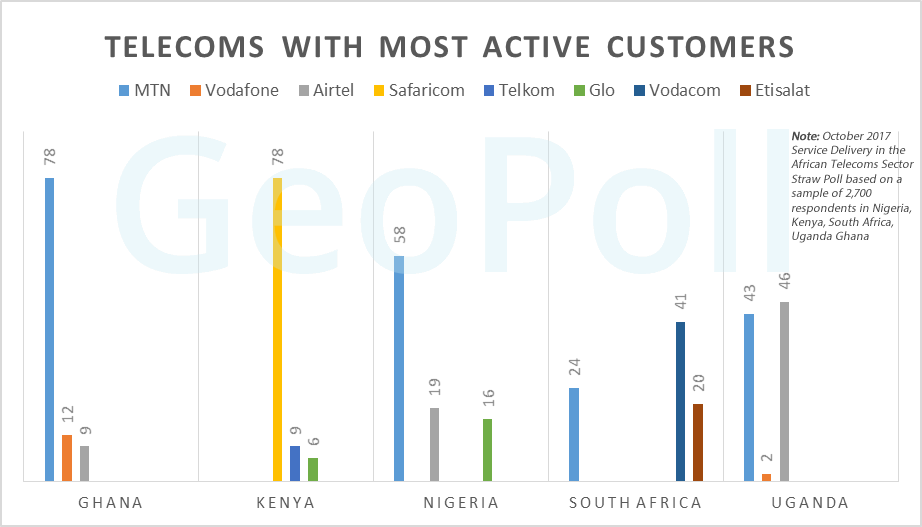
The telecom operators with the most active customers are MTN in Ghana and Nigeria, Safaricom and Vodacom in Kenya and South Africa respectively and Airtel in Uganda, our straw poll reports. Although the scope of our survey did not focus on what aspects the telecom’s service offering users are active on,strong evidence suggests that the mobile users are utilizing data services to access the internet.
A new report by Analysys Mason, predicts that the African telecoms market is set to be one of the main growth success stories for the telecoms sector in the next 5 years. The report also projects that smartphones will account for 26% of handsets in SSA by 2018, as device prices decline and users upgrade. The report notes that telecom operators continue to stimulate smartphone adoption via targeted campaigns, promotions on low-cost smartphones, and bundled data packages.
According to the African Business magazine, as the mobile telecoms market begins to mature, African service providers are beginning to offer new products. The focus has switched away from securing ever more subscribers, towards boosting their average revenue per user (ARPU) rates through encouraging greater data consumption and mobile banking. Having an increased number of active users is good for the telecoms business.
Improved Service Delivery
The straw poll confirms that there has generally been an improvement in service delivery from the telecom operators as the number of mobile subscribers and time spent on phone increase. Mobile users are satisfied with the quality of voice delivery. The average rating given across the different operators is 7.2 points; The ratings were determined on a scale of 1 to 10, with 1 being very poor and 10 being excellent. The telecom operators with the most active users also scored well on: data and voice costs, coverage for mobile internet and voice; quality of internet speed as well as in customer service. Mobile users in the five countries are likely to recommend their telecom operator to friends and family.
Mobile data usage is on the rise. The increase in data traffic is particularly strong in Africa. As a result, the continent’s telecommunications sector, especially the operators and the regulators, are geared to experience a drastic transformation. Service delivery and cost remain the main value propositions that telecoms will compete.
For more information, contact us today at [email protected] and {{cta(‘abdce7d8-c8cb-47d9-b637-625dabe4a1d9’)}} to our newsletter to receive updates.
Photo Credits, AFP
The post Which are the Best Telecom Operators in Sub-Saharan Africa & How are They Working to Improve Service Delivery? appeared first on GeoPoll.
]]>